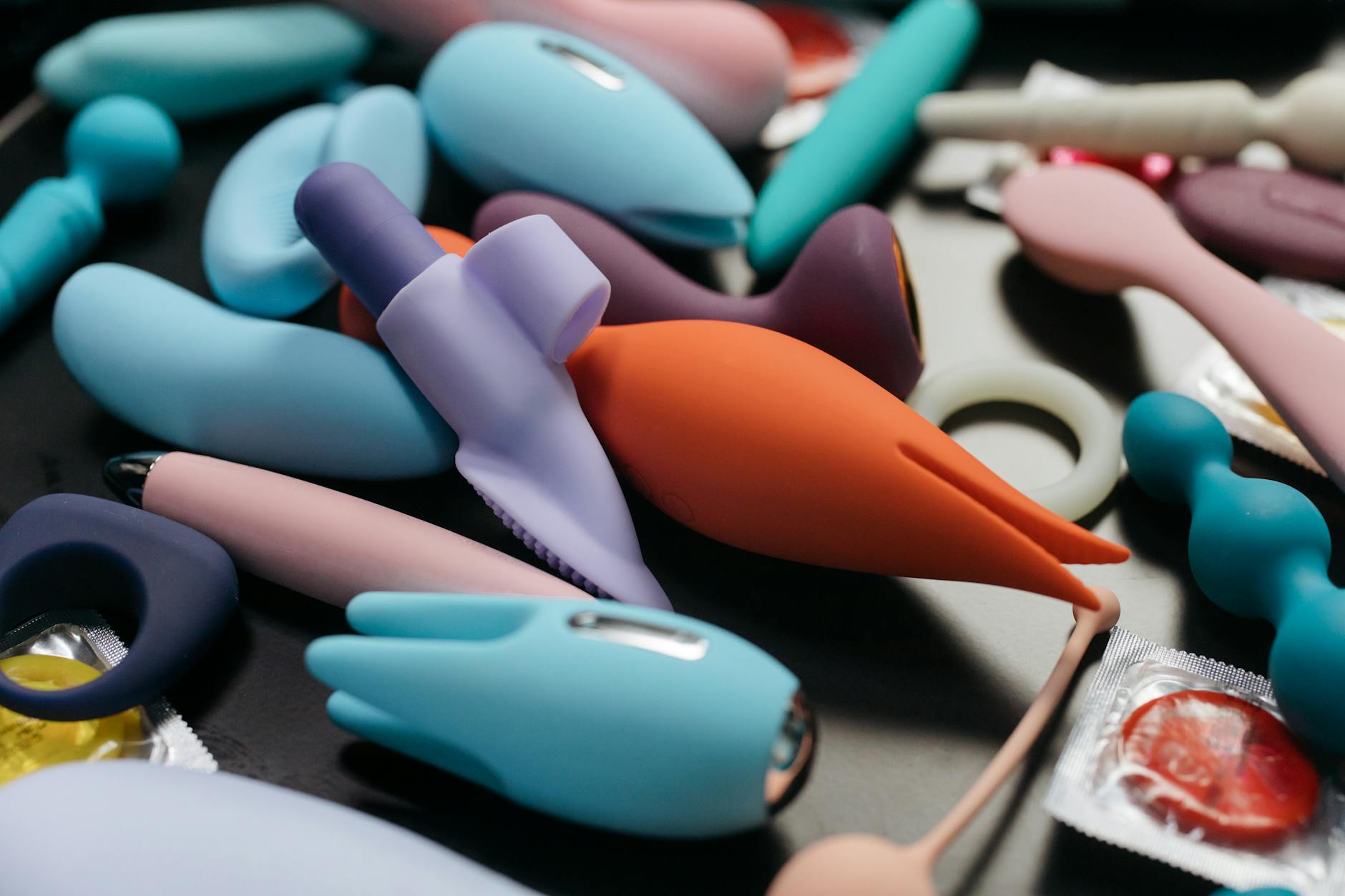
Let's talk about the antidepressant elephant in the room
Antidepressants save lives. They also change how your body experiences pleasure, and nobody talks about it with any honesty. You get a prescription, maybe a pamphlet about dry mouth and nausea, and absolutely nothing about the fact that arousal will take longer and orgasm might feel distant or harder to reach.
Here's what actually happens: SSRIs (like sertraline or fluoxetine) and SNRIs (like venlafaxine) increase serotonin in your brain, which is wonderful for mood and anxiety. The catch is that serotonin suppresses dopamine and norepinephrine. Those two chemicals are what fire up your body's arousal engine. So your brain chemistry literally slows down the signals that make you horny, lubricated, and able to come.
The good news? This isn't permanent, it's not unfixable, and lemon clitoral vibrators work in a way that actually bypasses some of this friction.
How antidepressants specifically change arousal timing
Let's break down what's happening physiologically so the solutions make sense.
Normally, arousal is a cascade of events. You see something, think something, or feel something. Your brain releases dopamine. That dopamine tells your nervous system to get ready. Blood flows to your genitals. Your body relaxes. Lubrication starts. Everything is primed for pleasure.
Antidepressants don't shut this down. They slow it down. The chain reaction takes longer to start, and once it starts, it moves slower. Some people report needing 30 to 45 minutes to reach the arousal level they used to hit in 10 minutes. Some experience delayed orgasm, where everything feels good but the finish line keeps moving further away. Others feel numb, where sensation is muted.
This happens because serotonin is competing with the neurotransmitters that drive arousal. It's not that your body is broken. It's that the balance has shifted, and your brain needs different input to reach the same output.
The dose matters too. Higher doses of antidepressants often create more noticeable delays. And the longer you've been on them, the more your body adapts. But adaptation can also mean you find workarounds that work better than your original baseline. That's where lemon vibrators come in.
Why lemon vibrators bypass the arousal delay problem
This is the part that changes everything. Lemon clitoral vibrators use air-pulse suction technology instead of traditional vibration. That distinction matters enormously when you're on antidepressants.
Traditional vibrators ask your body to feel increasing sensation and translate that into arousal. When your serotonin levels are high and your dopamine is low, your nervous system is less responsive to stimulation. The vibration needs to get stronger and stronger to register, and you can end up chasing intensity that exhausts you without the payoff.
A lemon clitoral vibrator works differently. The suction creates sustained pressure and release cycles that stimulate the clitoral nerves in a way that feels more like direct caressing than buzzing. Because the lemon's mechanism focuses on nerve stimulation rather than relying on your brain's dopamine-driven arousal response, it can trigger orgasm even when your arousal timeline is stretched.
Many of my clients on antidepressants report that lemon vibrators are the first toys that actually let them come consistently. It's not because the toy is magic. It's because the technology matches the neurochemistry they're working with.
What timing adjustments actually help
If you're on antidepressants and want to use lemon vibrators effectively, here's what I recommend.
Timing One: Consider using your vibrator earlier in your arousal cycle. Don't wait until you feel "ready." Introduce the lemon vibrator 10 to 15 minutes into foreplay or self-pleasure, even if you don't feel like you need it yet. Because antidepressants slow dopamine response, waiting for arousal to build naturally often means waiting forever. Let the vibrator do part of the work of building arousal, rather than asking it to finish a job your brain can't fully start.
Timing Two: Budget more time overall, but not more waiting. Instead of expecting arousal in 10 minutes and orgasm in 20, plan for 30 to 40 minutes. But fill that time with foreplay, sensation, partner touch, or the vibrator itself. Don't spend 25 minutes waiting for something to happen and then pull out the lemon vibrator in frustration. That's setting yourself up for disappointment. Use the vibrator as part of the experience, not the rescue plan.
Timing Three: Let yourself build to orgasm more slowly. On antidepressants, orgasms often feel less explosive and take longer to crest. Instead of resisting that, work with it. Start the lemon vibrator on lower patterns and let it build over 10 to 15 minutes. This isn't lazy or disappointing. It's often more intense and full-bodied than the quick peaks you remember from before medication.
Timing Four: Consider the time of day. Antidepressants affect your energy and neurotransmitter levels throughout the day. Some people find that morning or midday arousal is slightly easier than evening, when fatigue stacks on top of the medication's effects. If you're struggling to feel anything, experiment with timing.
When to talk to your doctor about dosing
Sometimes the arousal delay or numbness is so severe that it's worth revisiting medication with your prescriber. This isn't giving up on the antidepressant. It's optimizing it.
Your doctor can offer several options. They might lower the dose slightly to see if a smaller amount still manages your mood but loosens the arousal brake. They might switch you to a different class of antidepressant. Bupropion, for example, actually increases dopamine, so some people experience less arousal delay on it. They might add a second medication that counteracts sexual side effects, like buspirone or bupropion. Or they might recommend taking your regular dose with a timing tweak, like dosing the medication at night so the peak effect happens while you're sleeping.
None of these conversations are shameful. Sexual function is part of quality of life. A good prescriber will take this seriously.
The lemon vibrator plus partner angle
If you have a partner, the arousal delay hits differently. You're on antidepressants, your partner isn't, and suddenly their arousal timeline doesn't match yours. They're ready in 10 minutes and you need 35. This creates frustration on both sides.
A lemon clitoral vibrator can actually solve this mismatch more cleanly than anything else. Your partner can use it with you as part of foreplay, which keeps you both engaged without either of you waiting for the other to catch up. The lemon vibrator becomes a shared tool for pleasure, not a consolation prize for being slow. That's a fundamentally different energy.
You can also use it while your partner enters you, which adds external stimulation that would normally take your body much longer to build naturally. This syncs your arousal and helps you reach orgasm closer to your partner's timeline, without either of you forcing anything.

Photo by cottonbro studio on Pexels
Antidepressants, lemon vibrators, and patience with yourself
One thing I notice with clients on antidepressants is that they often feel like they're broken. The medication is working brilliantly for their mental health, but the side effects feel like a punishment. Using a lemon vibrator becomes tangled up with that feeling. Like they shouldn't need it, or using it means they've failed.
Here's what I want you to hear: A lemon clitoral vibrator isn't a workaround for being broken. It's a tool that works with your current neurobiology. You're not less sexual or less capable of pleasure. You're on a medication that requires a different approach to pleasure than you used before. That's completely fixable and actually pretty straightforward once you understand what's happening.
The lemon vibrator, because of how it works, is one of the best tools for this specific problem. It's not magic. It's engineering that matches your chemistry. That's actually better.
FAQs: Antidepressants, arousal, and lemon clitoral vibrators
Can antidepressants permanently damage my ability to have an orgasm?
No. The arousal delay and difficulty with orgasm are side effects of the medication, not permanent changes to your body. If you stop the antidepressant, your baseline arousal response will return. That said, stopping antidepressants without medical supervision isn't a solution because your original symptoms will likely return. Work with your doctor on adjustments instead.
Will using a lemon vibrator make my antidepressant work less well?
No. A vibrator is a tool for pleasure. It doesn't interact with your medication or reduce its effectiveness for mood and anxiety. Using it regularly won't change how your brain responds to the antidepressant.
How long does it usually take to adjust to arousal changes on antidepressants?
This varies widely. Some people notice changes within days of starting medication. Others don't notice anything different for weeks. And some adapt over time, meaning the delay or numbness gradually improves over months or even years as your body gets used to the medication. If after six months of taking antidepressants you're still struggling significantly with arousal or orgasm, that's worth discussing with your prescriber.
Is it normal to feel numb or disconnected during sex while on antidepressants?
Yes, it's common. Some people experience complete numbness. Others feel disconnected, like they're watching sex happen rather than experiencing it. This is a known side effect of SSRIs in particular. It's called emotional blunting or anhedonia when it involves pleasure specifically. If it's severe, mention it to your doctor. They can adjust dosing or try a different medication.
Can I use a lemon vibrator right away, or do I need to wait until my antidepressant reaches steady state?
You can use one anytime. Most people reach steady state on antidepressants after about four weeks, meaning the medication levels in your body stabilize. But if you want to explore now, go ahead. Just be aware that the full effects of the medication on your arousal might not show up for a few weeks, so don't assume the vibrator isn't working if you're still adjusting to the medication itself.
Does switching antidepressants help with arousal delay?
Sometimes. It depends on which medication you switch to. Bupropion and some tricyclic antidepressants are less likely to cause arousal delays than SSRIs and SNRIs. But switching isn't always the right move because of the other benefits your current medication provides. Work with your doctor to weigh the options.
You deserve pleasure, even medicated
Antidepressants are one of the best tools we have for managing depression and anxiety. The arousal side effects are real, but they're also completely manageable. Understanding why your body is responding differently helps you stop blaming yourself and start problem-solving.
A lemon clitoral vibrator works with your neurochemistry, not against it. Combined with better timing, partner communication, and honest conversations with your doctor, it's often enough to restore pleasure to a place that feels easy and satisfying again.
Your mental health matters. Your sexual pleasure matters too. They're not in competition. You can have both.