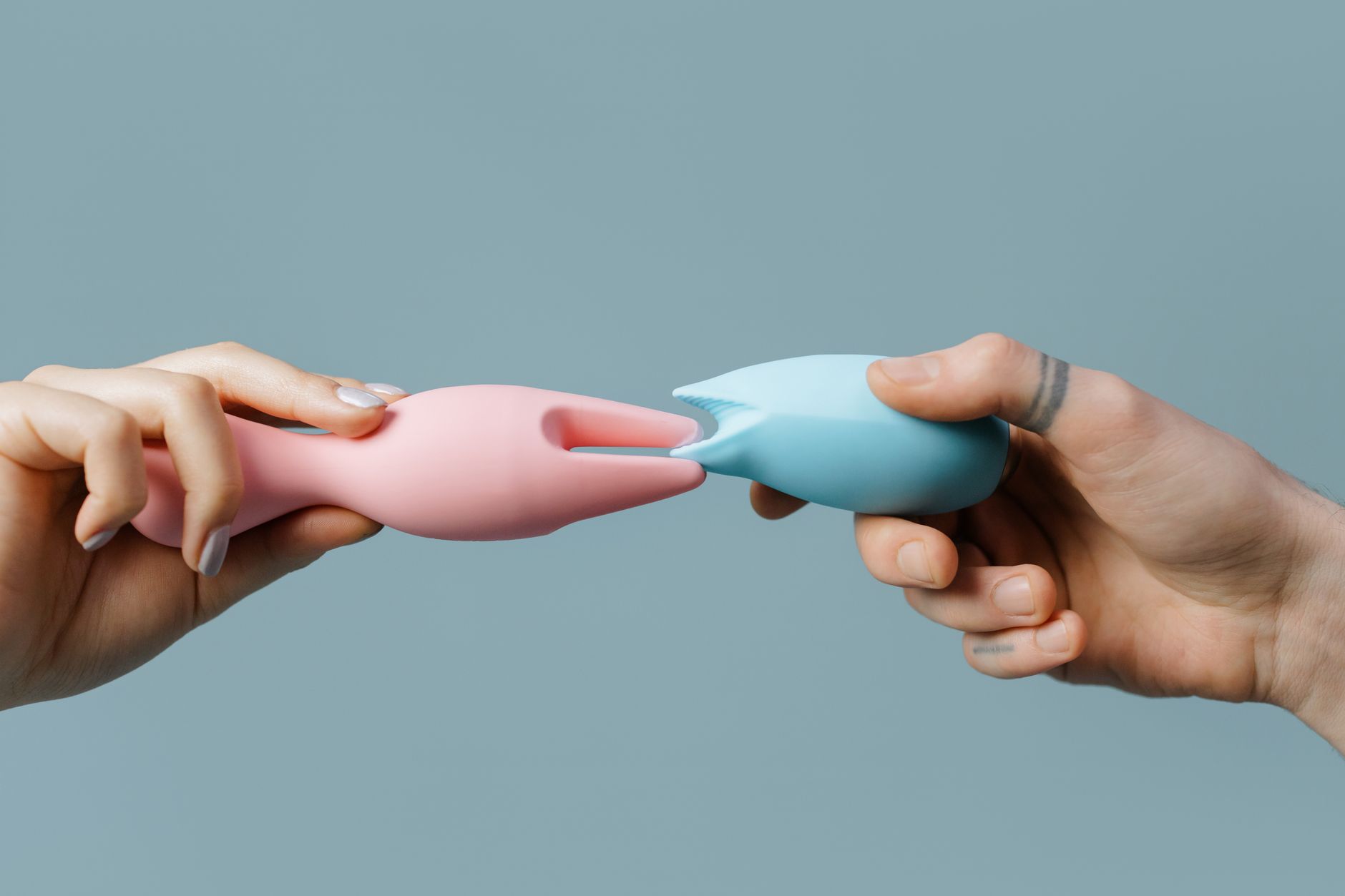
Let's talk about pleasure after trauma
Reclaiming your sexuality after sexual trauma isn't about forcing yourself back to where you were before. It's about rebuilding your relationship with your body from the ground up, with patience and agency. That's where tools like lemon vibrators come in. They're not a magic fix. But they're often the first tool that feels genuinely safe because they give you complete control.
Here's what I've seen in my practice: survivors often reconnect with pleasure faster when they have a tool that removes friction, eliminates guesswork, and lets them be entirely in charge of pacing, intensity, and when to stop. Lemon clitoral vibrators are designed exactly that way.
Why control matters more than sensation
After trauma, your nervous system has learned to protect you by staying vigilant. That hypervigilance is a survival mechanism. It's not a character flaw. But it does mean that pleasure often gets hijacked by anxiety or flashbacks without warning.
Lemon vibrators address this because they shift the control entirely to you. You choose the pattern. You choose the intensity. You choose how long. You can stop instantly. There's no negotiation with a partner's pace, no surprise, no pressure. That predictability is healing.
Many survivors tell me that the first time they experienced an orgasm again, it happened alone with a tool they could control. Not because partnered sex is wrong, but because solo exploration with a lemon clitoral vibrator removes one major variable: whether someone else's needs will override your own.
Starting slow: the trauma-informed approach
If you're using a lemon vibrator for the first time while recovering from trauma, here's what works.
Begin clothed or over underwear. Direct stimulation can trigger overwhelm, even if you're ready. Fabric between you and the toy gives you a buffer. You're still building tolerance.
Use pattern 1 only. The Lem vibrator has multiple patterns. Stick to the lowest, gentlest one for your first few sessions. Your nervous system doesn't need to prove anything. Slow rewires faster than intense.
Set a time limit. Five to ten minutes is plenty. You're not hunting for an orgasm. You're teaching your body that touch can feel safe. Stop before you feel fatigued or triggered. This is about trust, not achievement.
Practice breathing. Trauma survivors often hold their breath during arousal. Before you start, take five deep breaths. Then, during use, notice if you're holding. Breathe out when you're tense. This signals safety to your nervous system.
If you feel triggered, disconnected, or numb during use, that's not failure. That's information. Stop, ground yourself (feel your feet on the floor, name five things you see), and try again another day.
Why suction vibrators feel different for trauma recovery
Lemon adult toys use suction technology, not vibration alone. That matters for healing because suction creates a sealed, focused sensation that doesn't require you to relax into penetration or deep contact. It's entirely external, entirely your choice.
Suction also builds arousal differently than traditional vibration. It creates a rhythmic pulse rather than a sustained buzzing sensation. Many trauma survivors find this gentler on a nervous system that's already learned to brace for pain. The rhythm feels almost meditative once you adjust to it.
Lemon sexual toys also come in a form that's easy to hold and easy to pause. You're never wrestling with a tool or feeling like it's controlling you. That agency is part of the healing.
Rebuilding desire: patience is the protocol
Sexual desire often flatlines after trauma. Survivors sometimes feel nothing when they think they "should" feel aroused. That numbness is protective. Your body is still keeping you safe.
Using a lemon vibrator won't instantly restore desire. But consistent, low-pressure solo exploration often does something quieter and more important: it reestablishes a conversation between your conscious mind and your body. You show up. You pay attention. You notice small sensations without judgment. Over weeks, that attention can thaw desire.
I recommend a gentle structure: two or three times per week, ten minutes max, no goal except to notice what you feel. Not to reach orgasm. Not to "prove" you're healed. Just to notice. That shift from performance to presence changes everything.
When to involve a partner
If you're in a relationship and you're healing, your partner needs to know two things: what helps you feel safe and what doesn't. Using a lemon vibrator solo isn't avoiding them. It's building capacity.
Many couples find that once a survivor can reliably experience pleasure alone with a tool they trust, introducing a partner becomes easier. The survivor already knows what works. The partner learns to follow their lead instead of guessing.
If your partner wants to be involved, set boundaries first. "I use this alone for now" is a complete sentence. "We can explore together when I'm ready" is enough. Healing isn't a shared timeline.
Red flags that mean you need professional support
If you're experiencing persistent numbness, intrusive flashbacks triggered by solo pleasure, or panic during arousal, a trauma-informed sex therapist or counselor can help. These tools work best alongside professional support, not instead of it.
A good therapist can help you understand your specific triggers and create a personalized plan. They can also help you and your partner (if you have one) navigate this transition together.
Building trust in your body again
Recovery isn't linear. Some days you'll feel connected to your body. Some days it will feel like a stranger. Both are normal. A lemon vibrator is just a tool that helps you practice safety and control on the days when you're ready.
Your pleasure matters. Rebuilding it takes time. But it's absolutely possible.
People also ask
Is it normal to feel nothing when using a vibrator after trauma?
Completely normal. Numbness is a trauma response. Your nervous system learned to disconnect pleasure to protect you. When you use a lemon vibrator and feel nothing, you're not broken. You're healing. Consistent, low-pressure exploration often thaws numbness over weeks or months. If numbness persists for more than three months of regular use, talk to a trauma-informed therapist.
Can lemon clitoral vibrators help with trauma-related anxiety during sex?
Yes, but with structure. Using a lemon vibrator alone first builds confidence. When you know your body responds safely to touch, partnered sex feels less unpredictable. If you want to use a lemon vibrator with a partner present, discuss it beforehand. Clear agreements reduce anxiety. You might say: "I want to use this with you watching," or "I need you to leave the room." Both are valid.
How long does it take to feel pleasure again after sexual trauma?
It varies widely. Some survivors reconnect with sensation in weeks. Others take months or years. There's no timeline. What matters is consistency and safety. Using a lemon sexual toy two or three times weekly with no performance pressure often shifts something within four to eight weeks. Many survivors report their first post-trauma orgasm within three months of regular, gentle exploration.
What if I feel triggered or panicked while using a vibrator?
Stop immediately. You're safe. Ground yourself: feel your feet, name five things you see, touch something warm. Breathe. After grounding, decide: do you want to try again in a few minutes, or do you want to stop for today? Either choice is fine. Pushing through panic doesn't build healing. It rebuilds the trauma response. If panic happens often, work with a trauma therapist to identify triggers before using a vibrator again.
Can I use a lemon vibrator while taking trauma medications like SSRIs?
Yes. SSRIs can dampen sensation or delay orgasm, but lemon vibrators are often particularly effective because the suction sensation works differently than vibration alone. If medication is affecting your pleasure significantly, talk to your doctor. Dosage adjustments or timing changes sometimes help. Don't stop medication to feel pleasure. That's not the trade-off.
Should I tell my partner I'm using a vibrator for trauma recovery?
That depends on your relationship and your comfort. You don't owe anyone access to your healing process. If you want to tell them, keep it simple: "I'm using this as part of my recovery. It helps me feel safe." If you prefer privacy, that's valid too. How to Introduce Lemon Vibrators to Skeptical Partners covers this conversation more deeply if you're ready to have it.