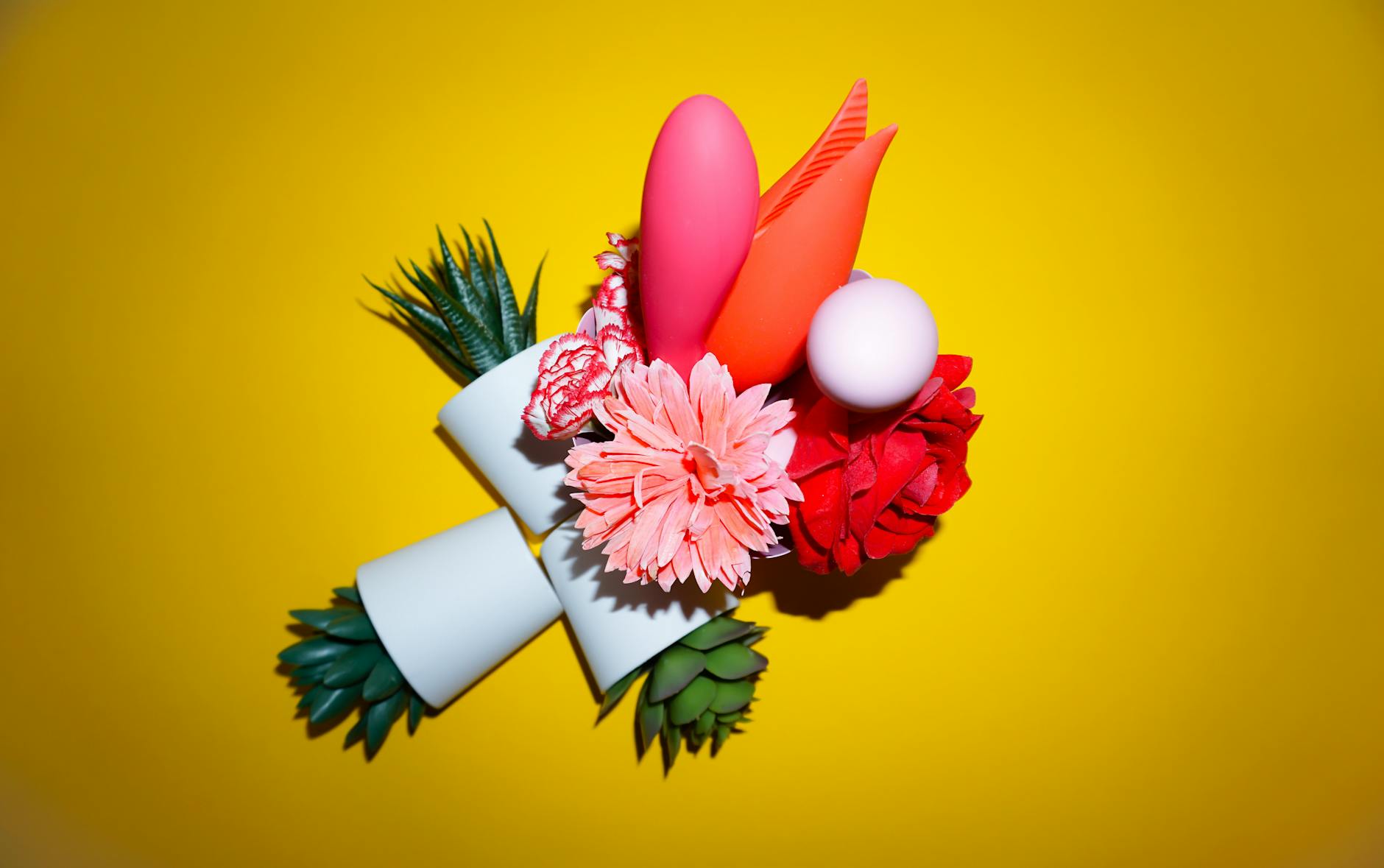
Let's talk about what actually happens when a long relationship ends
Your body has spent years—maybe decades—calibrating itself to someone else. You've learned the rhythm of their touch, the timing of their desire, what your pleasure looks like filtered through their presence. Then suddenly, you're alone. And the weirdest part? Your nervous system doesn't know what to do with solo sensation.
It's not laziness. It's not that you've "lost" your sexuality. It's that pleasure after a long partnership is genuinely unfamiliar territory. Your body needs retraining, not fixing.
The nervous system hangover from years of partnered sex
When you've been with one person for years, your arousal becomes tethered to their attention. You might've learned to come faster because they wanted that. You might've numbed out certain sensations because they didn't land for your partner. You might've prioritized their pleasure so consistently that you genuinely lost track of what you actually like when no one's watching.
This isn't dysfunction. It's adaptation. But it means solo exploration feels awkward at first because your body's been running on someone else's script.
The nervous system needs time to remember that pleasure can exist without an audience or a partner's validation. That's not weakness. That's literally how nervous systems work. They're shaped by context, and when the context changes, they need practice adjusting.
Why starting solo beats jumping into dating or new partners
I know the instinct. After a breakup, the temptation is to either swear off sex entirely or dive into someone new as proof that you're still desirable. Both strategies skip the most crucial step: rebuilding the relationship with yourself first.
Solo exploration has three massive advantages. First, there's zero performance pressure. You're not managing someone else's ego, timeline, or expectations. Second, you get to discover what actually feels good to you, untethered from years of adaptation. Third, you rebuild sexual confidence from the inside out instead of seeking it externally.
When you eventually date or partner again, you'll know what you like. That's powerful.
How to approach your body like new territory
Start by ditching the goal of orgasm entirely. I know that sounds counterintuitive, but orgasm-chasing often gets in the way of reconnection. Instead, treat your body like a map you're exploring for the first time.
Set aside time when you're genuinely relaxed. Not rushed. Not squeezing it in before bed when you're exhausted. A weekend morning, an evening when you've got the house to yourself for hours. Light a candle if that helps you feel intentional. Put your phone in another room.
Start with touch that has nothing to do with sex. Massage your own shoulders. Notice how different parts of your skin feel. Some areas are numb from years of dissociation. Some are hypersensitive. This is normal. You're gathering data.
Gradually move toward the areas you used to touch with a partner. This is where tools like a lemon clitoral vibrator become genuinely useful. Unlike a partner's hand, a vibrator doesn't judge. It doesn't speed up or slow down based on ego. It gives you consistent sensation so you can focus entirely on what your body is actually experiencing.
The practical advantage of clitoral vibrators for reconnection
After years of partnered sex, the clitoris often needs more direct attention than it used to get. This isn't because anything's broken. It's because solo exploration can be more intense, more focused, more yours than partnered sex ever was.
Lemon vibrators, particularly the clitoral suction design, work brilliantly for this phase because they don't require the direct pressure that can feel overwhelming on sensitive tissue. The suction stimulates nerves without the same mechanical intensity. You can start at lower settings and work up as your confidence grows.
Start with the vibrator on the lowest setting. Explore how it feels on different areas. Notice what makes your body respond. After months with a partner, these responses might feel unfamiliar. That's the whole point. You're relearning.
Managing the emotional weight of solo pleasure
Here's what nobody warns you about: solo pleasure after a breakup can bring up grief, shame, or weirdly, anger. Your body might remind you of what you've lost. Your brain might start telling stories about being alone, being broken, being undesirable.
That's not a sign to stop. That's a sign you're doing something meaningful. Pleasure reconnection is emotional work, not just physical work.
If shame comes up, pause and name it. "I'm feeling ashamed right now, and that's okay." Don't fight it. Don't try to pleasure through it. Just acknowledge it and come back to your body later. Shame needs gentleness, not forcing.
Rhythm, timeline, and what progress actually looks like
Don't expect instant results. Rebuilding sexual confidence isn't like flipping a switch. It's more like learning to hear your own voice after years of listening to someone else talk. The first few times will feel quiet, uncertain, unfamiliar.
Aim for consistency over intensity. Once a week of intentional exploration beats three panicked attempts in one night. Your nervous system learns through repetition and safety. Weekly solo time, even just 20 minutes, rewires your body faster than irregular marathon sessions.
Progress doesn't look like stronger orgasms. It looks like knowing what you like. It looks like your nervous system settling when you're alone with your body. It looks like pleasure that belongs entirely to you.
Many people find that after a few months of solo reconnection, something shifts. Pleasure stops feeling borrowed or contingent. It becomes yours. That's when you know you're ready for whatever comes next, whether that's dating or staying solo.
The conversation with yourself about what solo pleasure means now
Years of partnered sex might've made you feel like solo pleasure was a stopgap or a warmup. It's not. It's its own complete thing. It's how you learn your body. It's how you build resilience and confidence. It's how you stop needing external validation for your sexuality.
Some people find that after rebuilding confidence solo, their desire for partnered sex actually decreases. They realize they prefer the autonomy. Some people can't wait to share what they've learned with a new partner. Both are valid. The goal isn't to reach some predetermined endpoint. It's to rebuild trust with yourself.
When to know you're ready to explore with a partner again
You'll know when it's time because your body will feel like yours again. You won't be exploring in hope of feeling desirable. You'll be exploring because pleasure matters to you. That distinction is everything.
When you do date or partner again, you'll bring something the old relationship never had: genuine self-knowledge. You'll know what you like. You won't be so desperate for validation that you override your own signals. You'll have boundaries because you've spent time listening to yourself.
That's the gift of solo reconnection. It's not just about having good orgasms. It's about building a relationship with yourself that's so solid that partnership becomes a choice, not a necessity.
FAQ: Common questions about sexual confidence after breakup
Is it normal to feel weird about your own body after years with a partner?
Completely normal. Your nervous system has been in partnership mode for so long that solo sensation literally feels foreign. You're not broken. Your body just needs retraining. Think of it like muscle memory after time off the gym. You haven't lost the ability. You're just out of practice.
How long does it usually take to rebuild sexual confidence?
This varies wildly depending on how long the relationship was, how the breakup happened, and what other life stress you're managing. Generally, consistent solo exploration over 3-6 months creates noticeable shifts in confidence. Some people need longer. Some feel reconnected faster. There's no deadline.
Is using a vibrator cheating on my commitment to myself?
No. A vibrator is a tool for exploration, not a replacement for self-knowledge. It can actually accelerate reconnection because it gives your nervous system consistent sensation to learn from. Many people find that tools like lemon vibrators make solo exploration feel more intentional and worthwhile.
What if I feel guilt or shame when exploring solo?
Shame often comes up because we've been taught that pleasure "should" happen with a partner or that solo pleasure is somehow selfish. It's neither. It's self-care and self-knowledge. When shame appears, pause and remind yourself: your pleasure matters. It's not selfish to invest in your own body's trust and healing.
Can I move into dating while still rebuilding confidence?
Yes, but with intention. If you date before you've rebuilt solo confidence, you risk falling into old patterns where you're seeking validation instead of building it. Generally, spending a few months on solo reconnection first makes dating healthier because you're coming from a place of wholeness, not desperation.
What if I don't feel like my sex drive is coming back?
Low desire after a breakup is normal, especially if the relationship ended painfully. But if it's been 6+ months and desire still feels completely absent, it might be worth talking to a therapist. Sometimes low desire is grief disguised as numbness. Sometimes it's a sign you need support processing the breakup itself, not just the sexual part. Both are treatable.