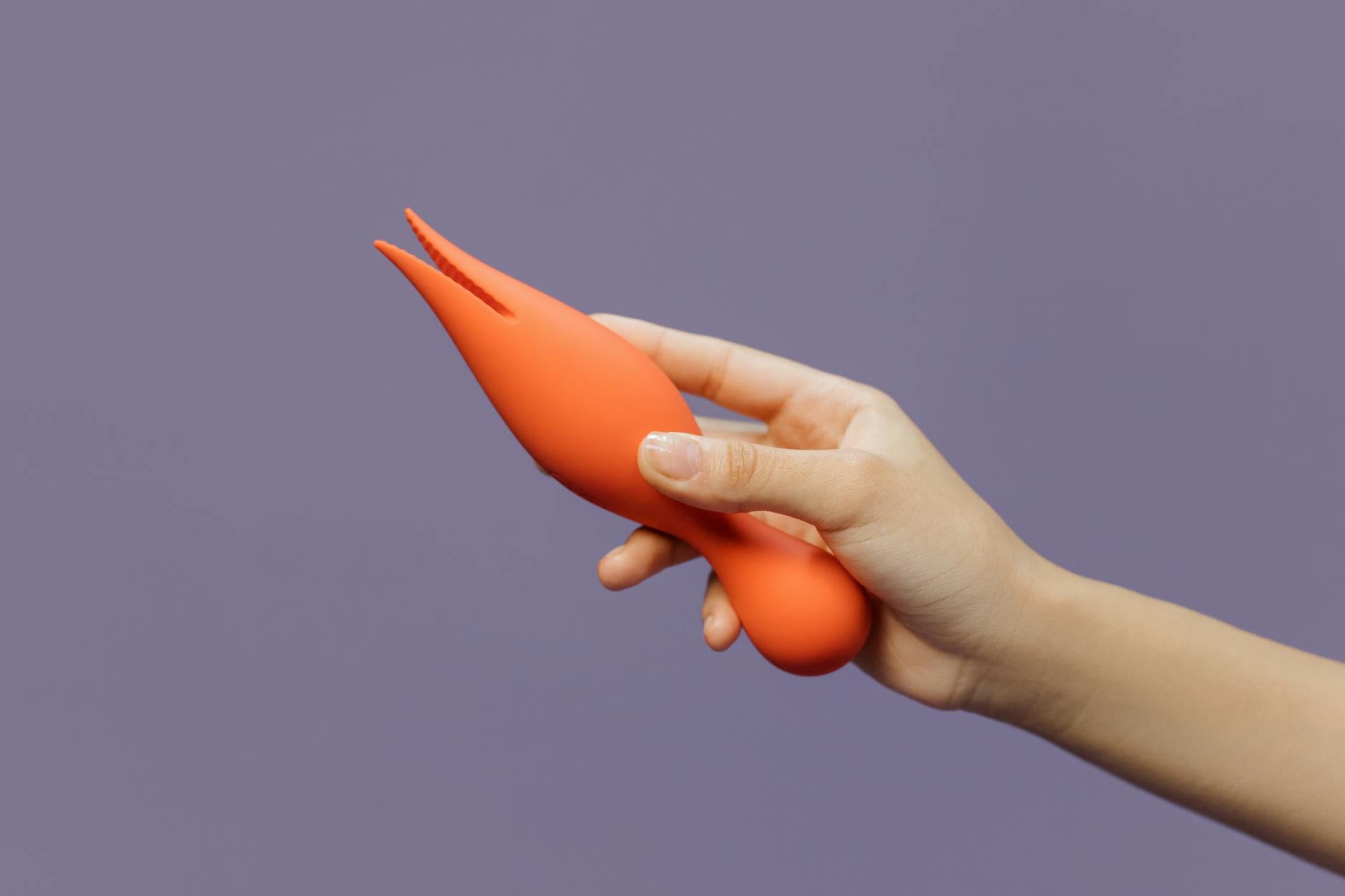
Here's the thing nobody tells you about vibrators
Your body is wildly adaptive. Which is brilliant for survival, terrible for maintaining consistent sensation. If you've been using lemon vibrators regularly and noticed that the same intensity doesn't hit the same anymore, that's not a sign your clitoral vibrators stopped working. It's a sign your nervous system got comfortable. And there's an actual solution.
Desensitization is real, predictable, and reversible. Most people think they need a stronger vibrator. What they actually need is a reset.
Why regular lemon vibrator use changes sensation
When you expose your nervous system to the same stimulus repeatedly, your body's nerve endings adapt. This is called habituation. The vibration from a lemon clitoral vibrator triggers a chain reaction in your brain. Repeated exposure at the same intensity trains those neural pathways to require more stimulation to fire the same way. It's the same reason your favorite song doesn't give you chills anymore after you've heard it a hundred times.
Two specific things happen with regular vibrator use. First, the sensory receptors in your clitoris literally become less responsive to that specific frequency and intensity. Second, your brain's anticipatory response dulls. That initial shock of sensation fades because your body learned what was coming.
This doesn't mean your clitoris is broken. It means it's working exactly as designed. But it also means you need to retrain it.
The reset protocol that actually works
Take a break. This is the part everyone hates, but it's non-negotiable. You need to give your nervous system time to re-sensitize. Two weeks is the absolute minimum. Three to four weeks is ideal.
Honestly, I recommend a full month. Here's why: the first week, you're managing withdrawal. The second week, sensitivity starts returning. By week three, you're in the sweet spot where new sensation patterns are forming. By week four, you're genuinely rebuilt.
During this time, don't use any vibrators. Not the lemon sucker variants, not other toys, nothing. Your nervous system needs actual rest, not substitution.
What you can do instead: explore non-vibrating touch. Hands, fingers, texture toys like ridged silicone without any vibration. The point is to rebuild sensation awareness with your whole nervous system, not just hammer the same pathway.
Sensory exploration practices during the reset
Once you're past the first week, you can start deliberately exploring sensation again. Think of this as retraining your pleasure body.
Start with temperature play. Ice cubes against your inner thighs and vulva. Warm hands. The contrast alone rewires sensation because it's unexpected. Your brain has to pay attention. Spend 10 to 15 minutes just with temperature, no goal of arousal. You're teaching your nervous system to notice subtlety again.
Then move to texture. Feathers, soft brushes, silk. Focus on the outer labia and the area around the clitoris, not direct stimulation yet. This phase is about re-establishing awareness of light sensation, which vibrators tend to skip right past.
Finally, reintroduce manual stimulation. Fingers, slow rhythm, deliberate pressure changes. You might feel almost hypersensitive at first. That's normal. That's actually your nervous system waking back up.
When you're ready to use lemon vibrators again
Don't jump straight back to the intensity you were using. Start at pattern one. Yes, the lowest setting. Spend five to ten minutes exploring that alone. Notice what you feel. Your sensitivity should have returned enough that even low intensity feels interesting again.
The goal here isn't to reach orgasm quickly. It's to remember what sensation feels like before your body adapts again. Speed ruins this. Patience rebuilds it.
Add variety intentionally. If you were using the same pattern and intensity every single time, your body learned that. Vary your rhythm, change intensity mid-session, use different toys. The Lemon's suction technology works beautifully as part of a varied routine, but rotation prevents adaptation.
Alternate. If you love your lemon clitoral vibrator, use it three times a week maximum. The other days, hands or other non-vibrating toys. This prevents the nervous system from settling into a predictable pattern.
Partner communication during sensitivity reset
If you're with a partner, this is the moment to have the conversation you probably should have had already. Don't frame it as a problem with the relationship. Frame it as a self-care project, because that's what it is.
Your partner needs to understand that you're intentionally recalibrating your body and that this might mean different kinds of sex for a month. Less vibrator-centered play, more touching, more presence. For many couples, honestly, this resets other stuff too. Connection improves when you slow down and relearn each other's bodies.
If you share toys, make sure you're the only one using your lemon vibrators during this time. Shared toys mean someone else is using the desensitizing frequency you're trying to escape from. Keep your reset isolated.
The neuroscience of re-sensitization
Your nervous system doesn't just adapt to intensity. It also adapts to predictability. This is why surprise is such a powerful component of sensation. If your partner or you know exactly when stimulation is coming and at what intensity, your nervous system essentially tunes it out.
When you reintroduce lemon vibrators or other clitoral vibrators after reset, build anticipation. Don't tell your partner exactly what pattern you're about to use. Change it mid-session. Stop and start. These are genuine pleasure optimization techniques, not games.
The science here is solid. Variable ratio reinforcement is one of the most powerful ways to maintain neural engagement. That's why slot machines are addictive and why routine is boring. Apply that principle deliberately to your pleasure instead of letting your body default to it.
What to do if you reset and sensitivity still doesn't return
Most people see dramatic sensitivity return within two to four weeks of true reset. But sometimes there's something else happening underneath.
Thyroid issues, hormonal imbalances, medications like SSRIs, and relationship stress all suppress clitoral sensation independently of vibrator use. If you reset properly and still feel muted, it's worth checking in with a doctor, ideally one who doesn't treat pleasure as irrelevant to health. It's relevant.
Pelvic floor tension also suppresses sensation, even though people think tight pelvic floor muscles would do the opposite. If your pelvic floor is chronically clenched, signal isn't getting through properly. A pelvic floor physical therapist can actually solve this.
Some people also find that their reset needs to be longer. Six weeks instead of four. This is rare but real, especially for people who've used high-intensity toys for years. Listen to your body instead of the timeline.
Preventing desensitization in the long term
Now that you know how this works, you can prevent it from happening again. You don't have to wait for a full reset every six months.
Rotate toys intentionally. Your lemon clitoral vibrator is brilliant. It shouldn't be the only tool. Trade weeks between different toys, different stimulation types, manual touch. Your nervous system craves novelty.
Vary your routine even with the same toy. If you always use pattern three at maximum, your body will adapt to that specifically. Use patterns one, two, and three at different intensities in the same week. Change which day you use vibrators.
Focus on partner play as much as solo exploration. Different hands, different rhythms, unpredictable stimulation. This alone prevents the kind of desensitization that happens with solo tool use at identical settings.
Take breaks proactively. Even two weeks off every three months makes a massive difference. You don't need to wait until sensation dulls completely.
FAQ: Sensitivity and vibrator use
Can I permanently damage my clitoris with regular vibrator use?
No. Nerve damage from vibration alone is extremely rare and typically only happens with truly intense industrial equipment. A lemon vibrator or any consumer clitoral vibrator is not going to cause permanent nerve damage. What you're experiencing is adaptation, which is completely reversible.
How do I know if I'm desensitized or just bored?
Desensitization feels like the same stimulus that used to feel intense now feels muted. The toy does the same thing, but your sensation of it has dampened. Boredom is different. You feel the sensation clearly, but it no longer interests you emotionally. If the toy still produces physical sensation but you're not enjoying it, that's usually boredom or relationship fatigue, not desensitization. Address that differently.
Does switching to a stronger vibrator actually help?
Temporarily, yes. But you've just reset your adaptation point higher. In three weeks, you'll be back where you started, now dependent on stronger intensity. This is the trap of always escalating. Reset instead. Your body will thank you.
Can I use numbing creams or delay sprays to keep sensation fresh?
Please don't. Those aren't addressing the actual problem. They're just masking it and creating a different kind of adaptation. They also change what pleasure actually feels like in ways that aren't ideal long-term. Do the reset work instead.
What if my partner thinks my desensitization means I'm not attracted to them anymore?
This is a conversation, not a secret. Explain that this is a physiological adaptation to toy use, not a relationship shift. Most partners find it helpful to understand that it's solvable through variety, touch, and presence rather than a sign of fading desire. Some couples actually use a reset as an opportunity to rebuild intimacy deliberately.
Is it normal to feel hypersensitive when sensitivity first returns?
Completely normal. Your nerve endings are essentially waking up. The first few days, things might feel almost uncomfortable in their intensity. This typically settles within a few days as your body calibrates. It's usually a sign that your reset is working.
The reset is an investment in your pleasure
Taking a month off sounds annoying. It's actually one of the most direct ways to get back to the sensation you originally loved. Your nervous system is designed to adapt, which is brilliant for survival and terrible for pleasure consistency.
The good news: awareness is half the battle. Now you know exactly why your lemon clitoral vibrator or any other vibrator stops hitting the same, and you have a concrete protocol to rebuild sensitivity. That's power.
Your pleasure is worth the investment of time and intention. The reset gets you back to where sensation feels like discovery instead of routine.