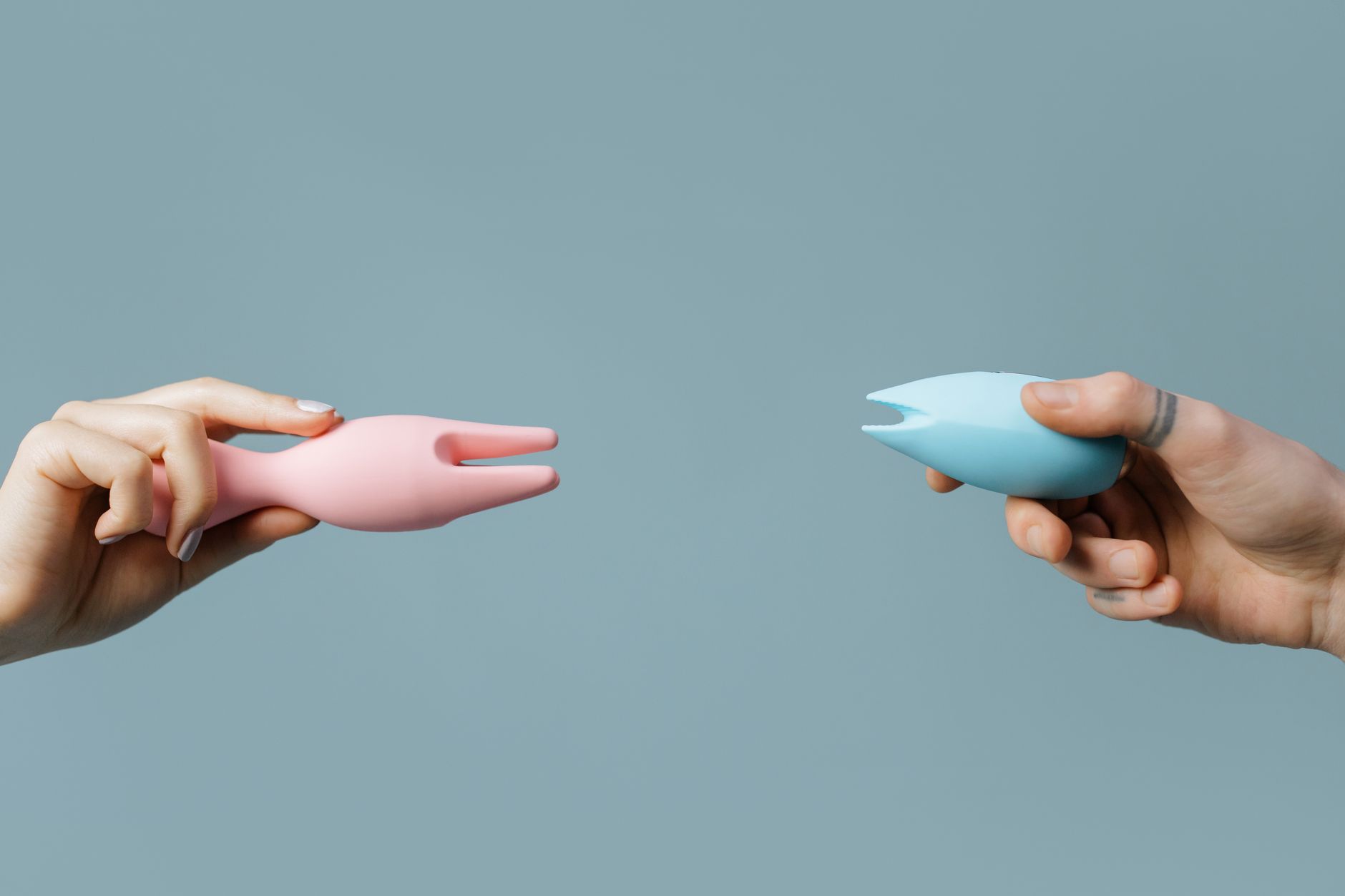
Here's what nobody tells you about perimenopause and pleasure
Perimenopause is not one state. It's a decade-long pendulum swing where your hormones, arousal, and sensation change sometimes week to week, sometimes day to day. One cycle you're easily aroused. The next, stimulation feels muted or uncomfortable. That's not a malfunction. That's perimenopause.
What makes this phase tricky is that you're caught between two worlds. You're not yet menopausal, so you still get hormone fluctuations. But those fluctuations are wild and unpredictable in ways they weren't in your twenties or thirties. This is why generic vibrator advice falls apart. You need a tool that works with variability, not against it.
Lemon clitoral vibrators are designed exactly for that. Here's why they work so well through perimenopause.
What perimenopause actually does to arousal
Your estrogen doesn't drop steadily during perimenopause. It spikes, crashes, recovers, and crashes again, sometimes multiple times in a single cycle. That instability affects five things in your body:
First, blood flow to your genitals becomes less consistent. Some days stimulation feels intense and immediate. Other days your tissues take longer to warm up and swell, which means the sensation is duller.
Second, your vaginal lubrication changes month to month, sometimes week to week. One cycle you're slick as planned. The next cycle, dryness shows up even if you're fully aroused mentally.
Third, your pelvic floor tension fluctuates with hormones. When estrogen is higher, those muscles relax more easily. When it drops, they tighten involuntarily. Tension changes how orgasms feel.
Fourth, your clitoral tissue sensitivity shifts. Some women report heightened sensitivity during certain phases, then numbness or desensitization in others. It's the same tissue, but the nerve response is changing.
Fifth, your mental arousal stays independent of all this physical chaos. You might want sex desperately but your body isn't cooperating. Or you feel indifferent but your body surprises you. Perimenopause teaches you that desire and physical response are not the same thing.
Why lemon vibrators handle hormonal variability better than other toys
Most vibrators rely on friction or direct pressure. That works great when your tissues are consistently thick and your blood flow is stable. During perimenopause, both are unstable.
Lemon clitoral vibrators use suction and gentle pulsation instead. Here's what that means for your hormonal reality.
Suction creates a seal around your clitoris, not on top of it. That means the stimulation works whether your clitoral glans is swollen or smaller, sensitive or numb. The mechanism itself accommodates the change. You don't have to change your pressure or pattern.
With suction, lubrication matters less than it does with friction toys. If you're dry one day, the seal still works. If you're well-lubricated, the sensation is richer but not painful. You have flexibility without sacrifice.
The pulsation patterns on Hello Nancy's lemon vibrators can start soft and build. During perimenopause, when arousal takes longer, you can spend 10-15 minutes on a lower pattern, then gradually increase. Your body catches up without feeling rushed.
Most importantly, suction creates a different kind of stimulation pathway than vibration alone. During periods when your clitoris feels numb or desensitized, the suction can wake it up in ways a buzz alone cannot. Women in perimenopause often report that suction toys feel revelatory after years of standard vibrators.
Adjusting your routine for shifting arousal
The tactical adjustment during perimenopause is simple but requires intention.
Track your cycle and your sensation. For two months, note which days you feel aroused easily and which days you feel flat or numb. Note which days lubricant is abundant and which days it's sparse. You'll start seeing a pattern tied to your cycle, even if it feels chaotic. Once you see the pattern, you can adapt your approach.
On high-sensation days, you can start higher on the intensity scale and reach orgasm faster. Use that as permission to take your time anyway. Lemon vibrators reward patience even when you don't technically need it. Some of my clients report their best orgasms come during high-sensation days precisely because they slowed down instead of rushing.
On low-sensation days, start at pattern 1 or 2. Stay there for 10-20 minutes. Let your body gradually wake up rather than shock it with intensity. If numbness persists after 20 minutes, that's not failure. It's information. Try again tomorrow or switch to manual stimulation with your partner.
On dry days, have water-based lubricant ready before you start. Apply it generously around your vulva and the toy. Silicone lubes feel richer but they damage silicone toys. Stick with water-based. It rehydrates your tissue too, which helps.
On emotional mismatch days (when you want sex but your body isn't cooperating, or vice versa), give yourself permission to do neither. Forcing arousal during perimenopause often backfires. The next day will likely feel different. This is a long phase. You don't have to optimize every encounter.
The mental game during hormonal chaos
Here's what I see most often in perimenopause clients: shame about the inconsistency. "Last week I came in 5 minutes. This week it took 45 minutes. Something is broken."
Nothing is broken. Your baseline is moving. That's the whole phase.
The mental adjustment is releasing the idea that your pleasure should be stable. It won't be for 5-10 years. That's not tragedy. It's actually an opportunity. Each month, you get to learn your body again. You get to discover new patterns, new sensations, new preferences.
Many women report that their best sexual experiences come during perimenopause precisely because they stopped trying to replicate what worked at 30. They adapted. They experimented. They gave themselves permission to feel different.
Partner communication during the shift
If you have a partner, the most valuable conversation you can have is this one: "My body is changing and I don't always know what I'll want or how I'll respond. Let's talk about pleasure like we're discovering it together, not like I'm a puzzle you used to have figured out."
Many long-term partners respond to perimenopause by withdrawing, assuming your lack of quickfire arousal means you're no longer interested in them. It's a misreading of your neurology as emotional distance. Naming that gap prevents a decade of unnecessary tension.
Lemon clitoral vibrators can actually be a bridge here. If your partner has always been the "do er" in sex, using a clitoral vibrator together can shift the dynamic from performance to collaboration. You're both discovering what works. Neither of you is failing.
When to check in with a doctor
If your vaginal dryness is severe enough that it's painful, ask your GP or gynecologist about topical estrogen creams. They have minimal systemic absorption and can transform comfort within weeks. Perimenopause dryness is treatable.
If you're bleeding heavily or your cycles are chaotic enough that they're disrupting your life, get that checked too. Perimenopause is normal, but severe bleeding or extreme irregularity can sometimes signal something else worth investigating.
If your desire has completely flatlined and it's accompanied by other symptoms like mood crashes or sleep disruption, talk to a menopause specialist. Sometimes progesterone support or other interventions help. Sometimes it's just perimenopause being perimenopause. Either way, you deserve someone listening.
The suction advantage during unpredictable arousal
I keep coming back to this because it's the reason lemon vibrators specifically work during this phase. When your body is inconsistent, you need a tool that is consistent in its approach but flexible in its effect.
Suction is that tool. It doesn't rely on your tissue being a certain thickness. It doesn't require perfect lubrication. It doesn't demand that your clitoris be maximally engorged. It works across all those states because the mechanism itself is responsive rather than rigid.
That's not marketing speak. That's clinical observation from years of talking to women navigating perimenopause. Lemon clitoral vibrators, especially the Lem vibrator model, come up again and again as the toy that "just worked" when nothing else did during the hormonal chaos.
FAQ: Lemon Vibrators and Perimenopause
Can lemon vibrators help if I feel numb during perimenopause?
Yes, often significantly. The suction mechanism on lemon clitoral vibrators works differently than vibration alone. Many women in perimenopause report that suction wakes up desensitized clitoral tissue in ways a traditional vibrator cannot. Start at a lower intensity and give it 15-20 minutes. The combination of suction and time often restores sensation that felt lost.
Will my lemon vibrator feel different as my hormones shift?
It might. The toy itself doesn't change, but your body's response will vary week to week. Some days it'll feel intensely pleasurable. Other days the same pattern might feel subtle or different in timing. This isn't the toy failing. It's your perimenopause baseline shifting. Trust the consistency of the tool even when your sensation feels inconsistent.
How often should I use my lemon vibrator during perimenopause?
There's no magic frequency. Some women find that regular use (2-3 times a week) helps them stay connected to their body and track their shifting arousal. Others use it once a week or less. The benefit of using lemon clitoral vibrators regularly during perimenopause is that you learn your patterns faster. You know which weeks are high-sensation and which are low.
Should I use lubricant with my lemon vibrator during perimenopause?
Absolutely, especially if you're experiencing the hormonal dryness that often accompanies perimenopause. Water-based lubricant is essential. It hydrates your tissue, helps the suction seal work optimally, and prevents irritation from friction. If one week you need lubricant and the next week you don't, that's normal perimenopause variability. Keep lube on hand.
Can my partner and I use a lemon vibrator together during perimenopause?
Yes. Because lemon vibrators work across varied arousal states, they're excellent for partners navigating inconsistent desire or response time. You can use it solo, or your partner can use it on you, or you can both experiment together. The suction sensation is different enough from manual stimulation that it often opens up new sensations you've both been missing.
What if my lemon vibrator doesn't feel good one week?
First, check lubrication. Second, check your cycle. Where are you hormonally right now? Third, give yourself permission to take a break. Just because it felt amazing last week doesn't mean it will this week. Perimenopause teaches you that pleasure is a conversation with your body, not a switch you flip. Try again in a few days or a week. The inconsistency is not about the toy. It's about your hormone-responsive body.
The long game through hormonal transition
Perimenopause is not a season to survive. It's a decade to explore. Your body is going to feel different, sometimes weekly. Tools like lemon vibrators that adapt to variability rather than demand consistency are going to become your allies.
The women I work with who navigate perimenopause most gracefully are the ones who stop expecting stability and start expecting discovery. Every shift in sensation is information. Every week your body feels different is an invitation to learn something new about yourself.
That's the real gift of perimenopause. Not the chaos. The permission.
Ready to explore what works for your shifting body? Get in touch with questions, or start with a lemon clitoral vibrator that's designed to work with hormonal change, not against it.