
The sensitivity myth needs to die
Let's be real. Most conversations about clitoral sensitivity frame it as a problem to solve, like you're broken and need fixing. That's backwards. Sensitivity is information. It's your body saying "this matters," not "this doesn't work." The confusion happens because people confuse sensitivity with fragility. They're completely different things.
Yes, your clitoris might respond faster to direct stimulation. Yes, intense vibration can sometimes feel overwhelming rather than pleasurable. But that doesn't mean you can't have powerful, sustained orgasms. It means you need the right tool and the right approach.
Lemon vibrators, specifically the suction-based design, work beautifully with sensitive tissue because they use gentle air-pulse stimulation instead of direct vibration. That distinction changes everything.
Why suction feels different on sensitive tissue
Your clitoris has roughly 8,000 nerve endings packed into a tiny space. When tissue is sensitive, those nerves are firing faster and more intensely. Direct vibration can feel like shouting at someone who already heard you the first time. Suction works differently.
Instead of buzz, suction creates rhythmic pressure waves. Think of it as a gentle rhythm rather than a constant buzz. The sensation builds gradually, which gives your nervous system time to integrate each pulse rather than flood your system all at once. With a lemon vibrator, you're not pounding the same nerves repeatedly. You're creating a wave of stimulation that moves across the tissue.
This is why people with sensitive clitorises often report that lemon vibrators feel less intense than traditional vibrators, but the orgasms are deeper and more full-bodied. You're engaging the nerves without overwhelming them.
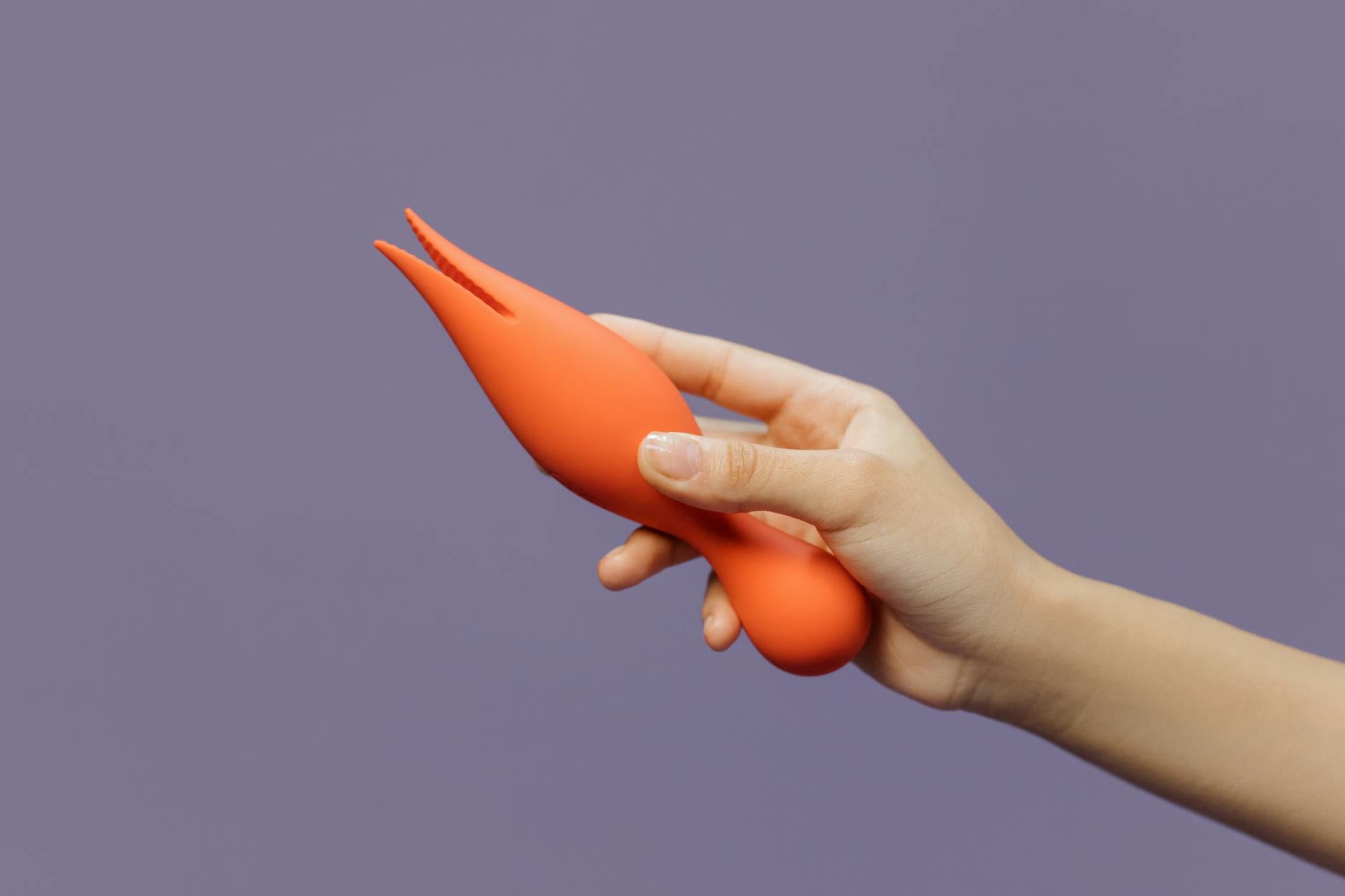
Photo by cottonbro studio on Pexels
The settings that actually work
Lemon vibrators typically have three to five intensity settings. Here's how to approach them if you have sensitive tissue.
Start at pattern 1 or 2, not because you're weak, but because you're learning. Low settings let you figure out the sensation without your nervous system going into overdrive. Spend a few minutes here. Let your body recognize the rhythm. This isn't a race to maximum intensity. You're building arousal.
Once you feel arousal starting, you can experiment with pattern 3. This is usually where the sweet spot lives for sensitive clitorises. It's stimulating enough to feel genuinely pleasurable, but not so intense that it creates that overwhelming "too much" sensation that kills arousal.
Many people skip right past pattern 3 because they assume they need to keep climbing. Don't. Patterns 4 and 5 exist for later, or for different moments. A solid orgasm at pattern 3 is infinitely better than tensing up and losing sensation at pattern 5.
The suction angle makes this possible because each pattern feels like a genuinely different experience, not just "louder." You're not losing ground by staying at a lower setting.
Positioning and angle matter more than you think
When your clitoris is sensitive, positioning becomes crucial. You want stimulation but not direct clamping pressure on the most sensitive spots.
Try starting with the lemon vibrator positioned slightly off to one side rather than directly centered. This angles the suction away from the most sensitive bundle of nerves while still creating stimulation. You can experiment with small movements to find the exact angle that feels best. Some people find upper positioning (slightly above the clitoris) works better. Others prefer slightly below. There's no universal "right" answer.
Angle changes the entire sensation profile. You're not just choosing intensity level. You're choosing which nerves get the primary stimulation. That's power.
Keep your hand relaxed while you're exploring position. Any tension in your hand or pelvic floor will make the clitoris feel more sensitive, not less. The moment you start gripping or tensing, you've told your nervous system "this might be too much." That signal kills arousal faster than anything else.
Building arousal before you introduce the lemon vibrator
This is where most people mess up. They jump straight to the toy without warming up, then blame the toy for feeling "too intense."
Spend 10-15 minutes on arousal first. Touch your body. Build sensation in your breasts, inner thighs, and lower abdomen. Let your nervous system know that pleasure is coming. This shift in state makes a dramatic difference in how you experience the lemon vibrator.
When your body is already aroused, your clitoris becomes less reactive to sudden stimulus. You've primed the nervous system for pleasure rather than showing up with no context and hitting it with vibration. It's the difference between someone tapping your shoulder while you're in conversation versus while you're sleeping. Context changes everything.
If you've been struggling with lemon vibrators feeling "too strong," this might be the missing piece. Try adding arousal time before introducing the toy, and see if the experience shifts.
The breathing pattern that transforms sensation
Honestly, this is the secret weapon nobody talks about. Your breath and your nervous system are directly connected.
When you use a lemon vibrator, try this breathing pattern: inhale for 3 counts, exhale for 3 counts. Steady, rhythmic, consistent. This breathing pattern naturally lowers activation in your sympathetic nervous system (the "alert" system) and activates the parasympathetic nervous system (the "relax and enjoy" system).
When your nervous system is in parasympathetic mode, the same intensity level that felt overwhelming in sympathetic mode suddenly feels pleasurable. You're literally changing your nervous system's response to the same stimulus just by adjusting your breath.
Keep the breath rhythmic and consistent throughout. The moment you hold your breath, you've flipped the switch back to sympathetic activation. That's when sensation gets choppy and orgasm becomes harder to reach.
Mental framing changes the physical experience
Here's the thing about sensitivity. Your brain interprets whether the same sensation is "too much" or "perfect" based on context and expectation.
If you go in thinking "my sensitive clitoris is going to make this overwhelming," your nervous system hears that and goes into protection mode. Sensitivity becomes a barrier. But if you go in thinking "my sensitive clitoris means I can feel incredible detail in pleasure," something shifts.
One is a problem frame. One is a power frame. Your nervous system believes whichever one you offer it.
This isn't woo. Your brain genuinely processes the same physical input differently depending on the story you're telling about it. That's why people with the same level of clitoral sensitivity have wildly different experiences with toys. One person finds them overwhelming. Another finds them transcendent. The tissue is the same. The narrative is different.
When to see a professional
If sensation has shifted recently, or if you're experiencing pain rather than sensitivity, that's a signal to talk to a healthcare provider. There's a real difference between "my clitoris is sensitive" and "I have pain with touch." Vulvodynia or other conditions can masquerade as sensitivity.
If you've tried the positioning, breathing, and arousal-building suggestions here and lemon vibrators still feel painful or unbearably intense, that's information too. Talk to a pelvic physical therapist or a gynecologist trained in sexual health. Sensitivity and pain are sometimes linked to pelvic floor tension or nerve sensitivity that benefits from specific intervention.
But most of the time, when people say their clitoris is "too sensitive" for toys, what they actually mean is "I haven't found the right technique yet." And that's fixable.
FAQ: Sensitivity and lemon vibrators
Will using a lemon vibrator make my sensitive clitoris even more sensitive over time?
No. Sensitivity is not like building tolerance. Your clitoris won't "get used to" stimulation and demand more intensity. What actually happens is your nervous system learns to distinguish between different types of stimulation. You become more attuned to what works, not more desensitized to everything. People often feel less reactive to their toys over time because they've learned positioning and technique, not because the tissue has changed.
Can I use lemon vibrators if my clitoris hurts with any touch at all?
If your clitoris causes pain with any touch, that's past general sensitivity. That's a condition worth exploring with a pelvic health specialist. Pain and sensitivity are different signals. Sensitivity says "this is a lot." Pain says "something needs attention." The lemon vibrator is great for managing sensitivity, but it's not the right tool for pain. Get that piece checked out first.
Is it normal for a lemon vibrator to feel less intense than a regular vibrator if I have sensitivity?
Completely. Suction-based lemon vibrators distribute stimulation differently than direct vibration. For sensitive tissue, that usually feels gentler initially. But many people find that suction actually produces stronger, more sustained orgasms over time. It's not about intensity. It's about quality. A pattern 3 orgasm on a lemon vibrator often blows away a pattern 5 experience on a buzzy toy.
Should I use lube with my lemon vibrator if my clitoris is sensitive?
Yes, especially if you're new to suction toys. A small amount of water-based lubricant reduces friction and actually makes the sensation feel smoother and less intense. It also helps the suction seal better, which paradoxically makes the whole experience more comfortable. It's not because you're dry. It's because lube changes the mechanics of how the suction engages your tissue.
What if the lowest setting on my lemon vibrator still feels like too much?
Try positioning off to the side, add more arousal time first, and focus on breathing. If all three of those are in place and you're still overwhelmed, you might be in sympathetic activation (fight-or-flight mode). That's not a toy problem. That's a nervous system state problem. Try using the lemon vibrator during a time when you're genuinely relaxed, not stressed or rushed. State matters more than setting.
Can sensitivity change with my cycle or hormones?
Absolutely. Clitoral sensitivity often peaks right before ovulation when estrogen is high, and drops during the luteal phase. If you notice your lemon vibrator feels too intense some weeks and perfect other weeks, that's your cycle, not the toy. Pay attention to those patterns. Use your most sensitive week to refine technique, then you'll have skills that work all month.
You're not broken
Sensitivity gets framed as a limitation. In my experience working with couples and individuals, it's usually a strength. Sensitive tissue means you have incredible capacity for pleasure if you learn to work with it instead of fighting it.
Lemon vibrators exist partly because sensitive clitorises deserve tools designed for them. The suction mechanism, the multiple settings, the ability to position and adjust angle. These aren't compromises. They're features built specifically for nuanced sensation.
Spend some time experimenting. Try the positioning shifts, the breathing patterns, the arousal building. Your sensitive clitoris isn't holding you back from amazing orgasms. It's actually the gateway to them. You just needed the right approach.
If you want more support on this front, reach out to the team. We're here to help you figure out what works.