When distance becomes a relationship fact
Here's what nobody warns you about: time apart doesn't just create physical distance. It rewires your nervous system. You stop reaching for each other. Touch becomes awkward instead of automatic. You start wondering if you even remember how to be intimate together, and that wondering itself becomes a barrier.
If your partnership has weathered separation—whether it was work, family crisis, health issues, or just the slow creep of life pulling you sideways—you know the feeling. Reconnection isn't a light switch. It's a gradual conversation your bodies need to have again.
Lemon vibrators aren't a magic fix for that gap. But they can be a permission structure. They take pressure off performance, redirect focus from "will this feel right" to "what does this actually feel like," and they shift the frame from what you've lost to what you're both discovering right now.
Why distance breaks the sexual script
When partners are physically apart for an extended period, several things happen simultaneously. Your bodies forget the rhythm you had together. Your brains stop generating the neurochemicals that trigger anticipation. And most importantly, you both develop a kind of performance anxiety about "getting back to normal," which is a guaranteed way to never get there.
There is no "normal" to get back to. There's only now.
The intimacy muscles atrophy faster than physical muscles do. Your partner's touch can feel foreign. Initiation feels risky. You're both holding your breath, waiting for the other person to prove they still want this. Meanwhile, neither of you wants to be the one who tries first and gets rejected.
This is where introducing a lemon clitoral vibrator becomes genuinely useful. It's not about the device. It's about creating a scenario where both of you can participate without the vulnerability of full performance. One of you holds it. The other person receives sensation. Roles are clear. The focus narrows. The pressure evaporates.
The conversation before the toy
Bring it up when you're clothed, not in bed, and definitely not in the moment. Timing matters because your brain processes a suggestion differently when you're already aroused—it can feel like pressure instead of invitation.
Try something like: "I've been thinking about how we could ease back into touch without it feeling like we have to rebuild everything overnight. I found something I think could actually help with that. Would you be open to looking at it together?"
Notice what's in that phrasing: it names the real awkwardness (rebuilding), it frames the toy as a tool not a substitute, and it explicitly asks for consent before you even show them anything.
If they hesitate, don't push. Ask what the hesitation is. Often it's "I'm worried it means you're not satisfied with me" or "I'm nervous about being judged." Those are the real conversations. The toy is just the vehicle.
How to introduce it without making it weird
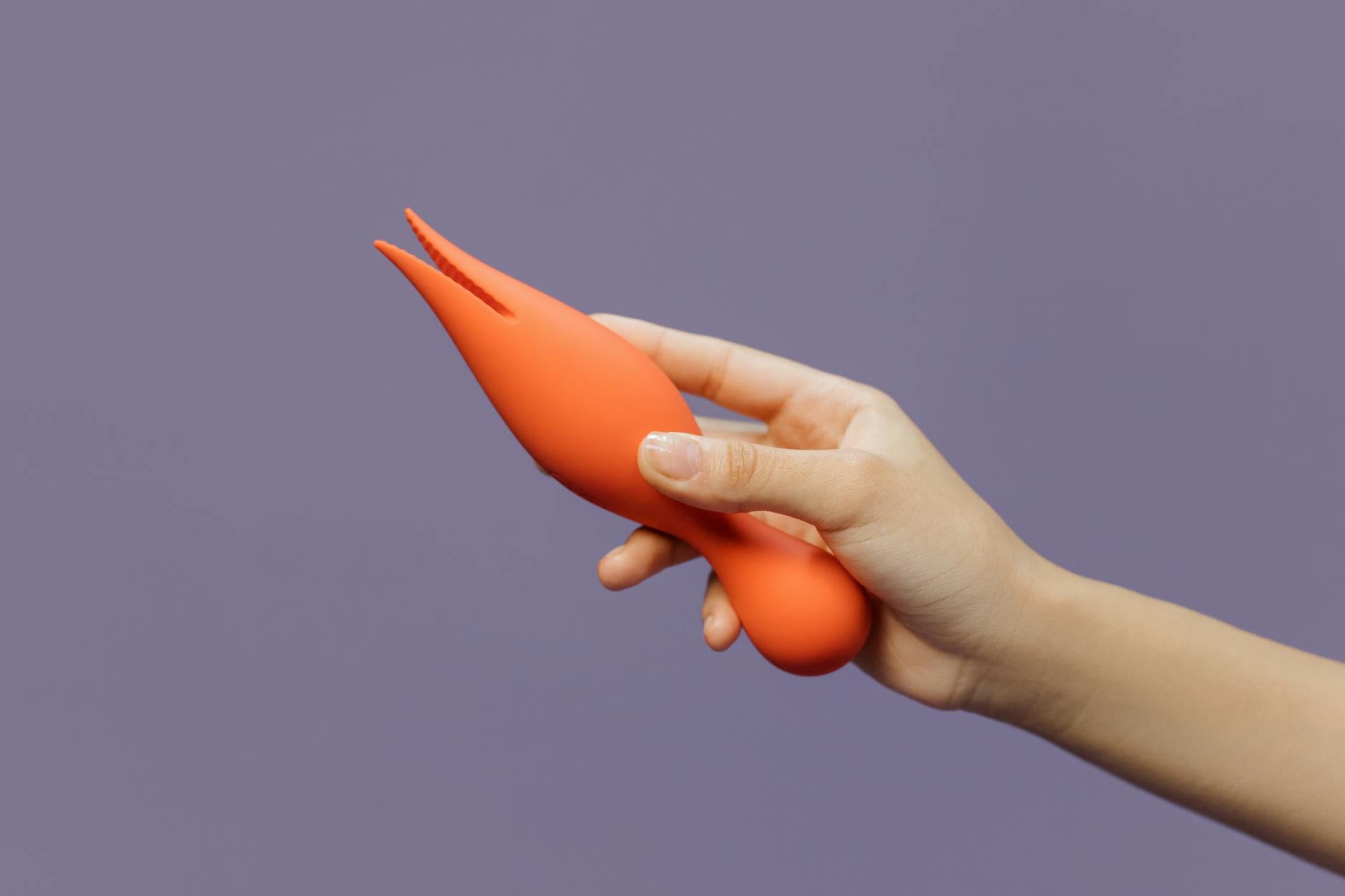
Start by showing them the device outside the bedroom. My Lemon Sex Toys' lemon vibrators are beautifully designed—they're not cartoonish or intimidating. Handle it casually. Let them pick it up. Let them feel the weight and the material. Familiarity kills awkwardness faster than anything else.
Talk through the buttons together. Show them the intensity levels. Make it matter-of-fact, like you're reviewing a kitchen gadget. The normalcy of that conversation is the whole point.
When you do move toward using it, go slow. Set aside time that feels deliberately intimate but not pressured. Dim the lights. Maybe light a candle if that's your thing. You're not performing. You're experimenting together.
Start with clothes on. Hold the lemon vibrator between you both while you kiss. Let them feel the vibration through your body. This is not foreplay. This is familiarization. The goal is for it to stop feeling like a foreign object and start feeling like an extension of what you're already doing together.
The actual mechanics of reconnection
When you're both ready to involve the toy in actual intimacy, the person who is receiving sensation should communicate constantly. "That feels good." "Try a lower setting." "I want you to do that again." This isn't awkward. It's the opposite of awkward. It's the most honest conversation your bodies can have right now.
The person holding the toy is in a position of care. You're paying attention to their breath, their responses, the micro-movements that tell you what's working. That's intimacy. That's not outsourced. That's you two, together, figuring out what your bodies want right now.
If lemon clitoral vibrators are new to both of you, expect the first time to feel a little strange. That's not a failure. That's normal. The second time will be easier. By the third time, you might be using it without thinking about it—just as one of many things you do together.
The emotional piece that most guides skip
Physical reconnection after distance doesn't work if the emotional distance is still there. If you haven't actually talked about what pulled you apart, or if there's resentment simmering underneath, introducing a vibrator won't fix that. It'll just add awkwardness on top of the real problem.
Before you even consider a lemon vibrator, have the harder conversation. "What did this distance do to how we feel about each other?" "Are there things we need to work through?" "Do you still want to be doing this with me?"
Those questions suck. They're scary. But they're the actual foundation. The vibrator is just what you use after you've answered them.
When to slow down or stop
If either of you starts feeling pressured, triggered, or disconnected, pause immediately. No negotiation. "This isn't working for me right now" is always a complete sentence.
Distance can sometimes resurrect old relationship patterns—one person becoming the pursuer, the other the avoider. Watch for that. If one of you is enthusiastic and the other feels obligated, you're back in the performance trap. That's not reconnection. That's going through motions.
The goal here isn't to have amazing sex. It's to rebuild the basic trust that you can be vulnerable together without judgment. If the toy is getting in the way of that, set it aside. Go back to basics. Touch without agenda. Be together without proving anything.
Practical tips for the first few times
Use water-based lubricant even if you don't think you need it. It reduces any physical friction and makes everything feel more intentional, less forced.
Keep the intensity low at first. Lemon vibrators offer multiple settings, and it's tempting to jump to high. Don't. Start at the lowest setting and work up only if you both want to. Building slowly is the whole point.
Have a conversation afterward, briefly. Not a debrief like you're writing a clinical report. Just "That felt good" or "I liked when you..." This plants seeds for next time and tells your partner what actually landed.
Don't expect it to fix everything overnight. Reconnection after distance is a process. Some sessions will feel awkward. Some will feel genuinely connecting. Both are part of it.
What happens when reconnection actually works
When partners successfully rebuild physical intimacy after distance, they often report that it's deeper than it was before. Not because of the toy. Because they had to be honest about how awkward it felt, they had to communicate constantly, and they had to choose each other consciously instead of just sliding into routine.
Distance forces intimacy onto the negotiating table. It makes it impossible to pretend everything is fine when it's not. And if you both show up willing to do that work, what you rebuild often looks less like "getting back to normal" and more like "starting fresh with everything we've learned."