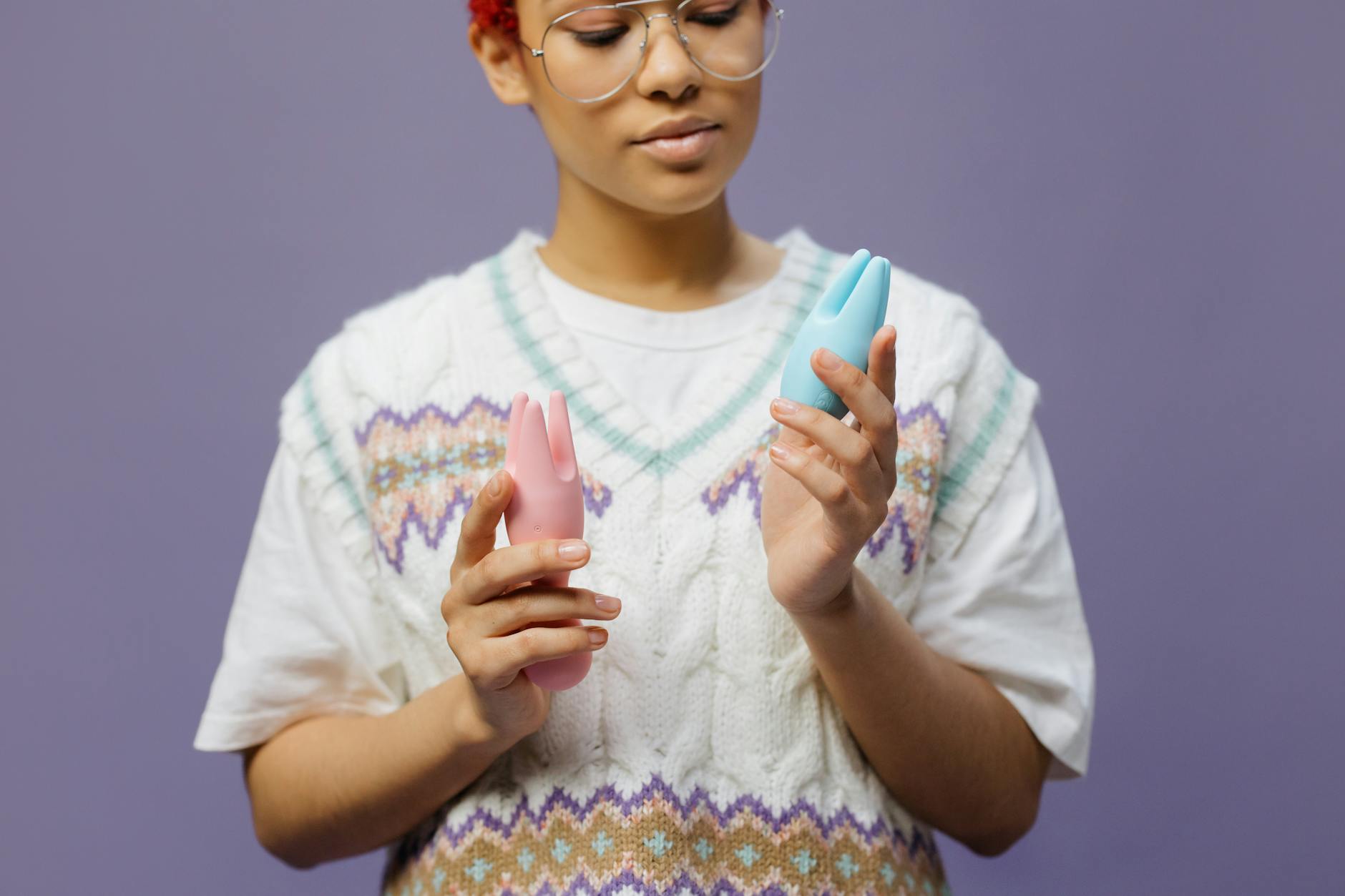
When pleasure goes quiet
Let's be real: if you've been on SSRIs or other antidepressants, you know that numbness. Not emotional numbness (though that too sometimes). Physical numbness. You're having sex and you're present and your partner is doing things that used to light you up, and you feel... almost nothing. A distant echo of sensation. Like watching your own pleasure through a thick window.
It's not in your head. It's neurotransmitters. Serotonin reuptake inhibitors do what they're designed to do. They can also blunt the dopamine and norepinephrine pathways that fire when you're aroused. About 40 to 60 percent of people on SSRIs experience some sexual side effect. Difficulty with orgasm. Delayed orgasm. Reduced sensation. All of it is real, and all of it is temporary.
But here's what happens next: your psychiatrist finds the right dose, or you switch medications, or your body adjusts. And one day you realize you can feel again. Touch registers. Your clitoris has opinions. Orgasm is back on the menu. Except now you're nervous. Your body is unfamiliar. You're not sure how to navigate sensation that's returning in waves, with gaps, sometimes inconsistently.
This is where lemon vibrators, specifically suction-style clitoral vibrators, become your best friend.
Why sensation numbness happens on antidepressants
The mechanism is straightforward. SSRIs increase serotonin availability in the brain by preventing its reuptake. This is excellent for mood regulation. It's less excellent for the cascade of neurotransmitters that builds arousal. Dopamine and norepinephrine are critical to sexual response. They trigger blood flow to the clitoris, increase sensitivity, and fire the pattern of activation that leads to orgasm.
When serotonin is elevated, it can suppress dopamine signaling in some pathways. The result: slower arousal, reduced sensation, difficulty or impossibility of climax. It's not that you've lost desire or capacity. The wiring is still there. The signal is just getting filtered.
Different medications have different sexual side effect profiles. Sertraline and paroxetine are worse offenders. Bupropion (an NDRI, not an SSRI) often leaves sexual function intact or even enhances it. But individual variation is huge. Some people on sertraline have zero sexual side effects. Others struggle immediately. The only constant is that it's real, it's common, and it's worth discussing openly with your prescriber.
When you change medications or adjust doses, dopamine signaling can recover quickly. Within days or weeks, some people notice arousal returning. Others take longer. But when it does return, the sensation might feel strange. Hypersensitive in some spots. Delayed in others. Patchy. That's normal. Your nervous system is recalibrating.
Why lemon clitoral vibrators help more than you'd expect
You might assume you need a strong vibrator to compensate for numbness. Wrong move. When sensation is returning, the last thing your clitoris needs is jackhammer vibration on maximum. That's overstimulation before your nerve endings are fully awake.
Lemon vibrators, especially suction-style clitoral vibrators, work differently than standard vibrators. Instead of buzzing directly against tissue, they create a gentle seal around the clitoris and stimulate via rhythmic suction. The sensation is concentrated, specific, and easier to modulate than broad vibration.
Why this matters for returning sensation: suction stimulates the entire clitoral complex (not just the visible external part, but the internal body of the clitoris, which extends into the pelvis). This distributes sensation across a wider neural network than direct contact alone. For people whose sensation is patchy or rebuilding, this fuller activation often feels more coherent. The sensation registers more completely.
Also, suction doesn't numb. Sustained direct vibration can create a kind of local desensitization if you use it too long. Suction actually maintains responsiveness better because it's not relying on friction or constant stimulation in one spot. You can use lemon adult toys longer, explore patterns and intensities, and your clitoris stays receptive.
Take it slow with intensity. Start on lower patterns (1 through 3 on most suction vibrators). Let your body surprise you. Many people report that their first orgasm after medication recovery is actually more intense than they expected, not less. That's because the sensory gates are finally opening again.
The emotional reset that matters as much as the physical one
Here's something no one talks about: sexual numbness on antidepressants often carries emotional baggage. You've spent months or years disconnected from your body. You might have guilt ("I'm not being a good partner because I can't come"). Resentment ("Why isn't my body cooperating?"). Grief over the sensations you used to have. Fear that they won't come back.
When sensation starts returning, you need to process that emotionally, not just physically. The lemon sucker vibrator is a tool. But reconnection is a practice.
Start solo. This matters. When you're rebuilding sensation, having the pressure of a partner's expectations in the room is real friction. Alone, you can experiment. You can notice what feels good without performing. You can discover that your pleasure is returning in its own rhythm, not in some predetermined timeline. Spend a few weeks just exploring with a lemon vibrator and no agenda. No orgasm goal. Just noticing sensation, mapping where responsiveness is returning, celebrating small awakenings.
Then, when you're ready, you can bring your partner back into the picture. And you can tell them specifically what you've learned about your body. "Lower intensity works better right now." "I like the pattern on setting 2." "Suction feels more consistent than standard vibration." That specificity transforms the conversation from "my body is broken" to "my body is waking up and here's what it needs."
Practical steps for using lemon vibrators through returning sensation
Start with external only. Clitoral vibrators are external. Your clitoris is still sensitizing. Adding penetration simultaneously is too much input. The suction vibrator can be your entire experience right now. Let it.
Use lubricant even though you're not penetrating. Returning sensation can come with minor irritation or dryness. Water-based lubricant makes everything feel better and protects delicate tissue that's been dormant.
Experiment with pattern, not intensity. Most suction vibrators have multiple rhythms. Steady pulse, waves, escalation. Numbness was blunt. Sensation returning often responds better to variation and pattern than to raw power. You might find that a mid-intensity pulsing pattern works better than low-intensity steady contact.
Set a timer. Not for performance. For awareness. Give yourself 15 to 20 minutes without the pressure of "did it work." If your brain is used to numbness, it might take your nervous system time to register what's happening. Longer sessions let sensation build gradually.
Notice without judgment. Some sessions your clitoris will respond beautifully. Others you'll feel almost nothing. That's not regression. That's fluctuation, which is normal for anyone, especially someone whose nervous system is recalibrating. Document what you notice (even just mental notes: "felt something today at the base of the clitoris") and don't attach shame to the sessions where sensation is quieter.
If you're with a partner, learn how lemon vibrators help when you and your partner use them together. Sometimes the conversation about rebuilding pleasure is easier when you're both working with a tool together.
Timeline and when to be patient versus when to check in with your doctor
Most people notice sexual side effects resolve within weeks to a few months after medication change. Some take longer. If you've been off numbness for six weeks and sensation is still patchy, that's normal. If you're at three months with zero improvement, mention it to your prescriber. There might be a dose adjustment or alternative that helps.
Also worth knowing: sometimes you need to talk to both your prescriber and a sex therapist. If numbness has lasted a long time, anxiety can layer on top. You might have learned to disconnect from your body as a coping mechanism. That requires more than a lemon vibrator. That requires permission to explore and possibly some therapeutic support. My Lemon Sex Toys can be part of the toolkit, but it's not the whole toolkit.
If pain appears during exploration, stop and contact a provider. Sensation returning is not supposed to hurt. Numbness can hide inflammation or structural issues that reveal themselves once sensation wakes up. That's worth investigating.
People also ask
How long does it take for sexual sensation to return after stopping antidepressants?
Most people notice improvement within two to four weeks. Full restoration can take two to three months. Everyone's timeline is different depending on which medication you were taking, how long you were on it, and individual neurobiology. If nothing has shifted after three months, talk to your doctor about whether the medication switch is actually the issue or if something else is at play.
Can I use a lemon vibrator on maximum intensity to wake up sensation faster?
No. Maximum intensity will actually slow you down. When your nervous system is recalibrating, intense stimulation can overwhelm it or create temporary local numbness through overstimulation. Think of it like waking a sleeping limb. You don't shake it violently. You stroke it gently until blood flow returns. Lemon clitoral vibrators work best on low to mid settings during this phase.
Does the type of antidepressant matter for how quickly sensation returns?
Yes, somewhat. Bupropion rarely causes sexual side effects because it works on dopamine and norepinephrine, not serotonin. SSRIs like sertraline and paroxetine have higher sexual side effect rates. But individual variation is enormous. Talk to your psychiatrist about your specific medication if sexual function is a concern before or after switching.
Is it normal to have inconsistent sensation while rebuilding?
Completely normal. Sensation returning is not a switch flip. It's gradual, sometimes with gaps. Some days your clitoris is responsive. Other days you feel almost nothing. This fluctuation can last weeks or months. Patience and consistent exploration without pressure helps it normalize faster than anxiety or performance expectations.
Should I tell my partner that I'm using a lemon vibrator to rebuild sensation?
That's entirely your call. If you're comfortable, yes. It can open a conversation about what's happening in your body and invites collaboration. "I'm rebuilding sensation and I'm exploring with a tool that's helping me understand what my body needs." If you need privacy and solo exploration time first, that's valid too. Do what feels right for your relationship.
Can lemon vibrators help if I'm still on antidepressants and want to improve sexual function?
Yes, to a point. Some people find that a lemon suction vibrator provides enough concentrated stimulation to reach orgasm even while on SSRIs. The suction mechanism is often more effective than standard vibration for people dealing with medication-related numbness. But it's not a replacement for talking to your doctor about sexual side effects. There are pharmacological solutions (dose adjustment, adding another medication, switching to a different antidepressant) that might help too.
The long view
Sensation returning is not something you're doing wrong if it's slow. It's not something your partner did or didn't do. It's biology catching up to chemistry. You've spent months in a fog. Your nervous system is learning to wake up again. A lemon clitoral vibrator helps that process because it offers consistent, modifiable, specific stimulation that your recalibrating body can actually work with.
Take time. Explore alone. Notice what's shifting. Then, when you're ready, bring it all back together. Your pleasure didn't disappear. It was just quieter. And it's coming back.
Want to talk through your specific situation? Reach out and we can help you figure out what might work best for where you are right now.