
Let's start with the permission part
Taking a break from sex is not a failure of desire. It is sometimes the most sane thing your nervous system can do. Whether you're coming out of a breakup, managing burnout, processing trauma, or just need to reset the way you think about your own body, stepping back is legitimate self-care.
What trips people up is the return. When you've been away from your body for weeks or months, sliding back into pleasure doesn't always feel like flipping a switch. It can feel awkward, numb, or like relearning a language you used to speak fluently. This is exactly where lemon vibrators help. Not to fix you. To meet you where you actually are.
Why mental health breaks shift your body's response
When you step back from sex, three things happen neurologically and emotionally.
First, your brain stops anticipating it. The neural pathways tied to arousal quiet down. That's not bad. That's actually your nervous system saying "okay, we're not doing that right now," and it's taking the pressure off. But when you want to return, those pathways need time to wake back up. They're not broken. They're just sleeping.
Second, shame or anxiety might have grown in the space you left. If the break was connected to grief, medical trauma, or relationship hurt, your body might have learned to protect itself. It says "remember what happened last time?" and holds back. That's your nervous system doing its job. Your job is to be patient with it.
Third, disconnection from your body is real. When you've been in your head managing stress or emotions, reconnecting to physical sensation takes practice. Your clitoris didn't forget how to feel pleasure. You just forgot you were allowed to have it.
The bridge back: solo exploration
I always recommend starting alone, without any tools at first. Spend a few weeks or even a month with your own hands, your own touch, no agenda. This is not foreplay. This is research. You're asking your body "what do you like right now?" without performance pressure.
Here's what changes: you're touching yourself the way a friend would touch you, not the way you think you should. Slowly. Curiously. Without a goal line. Notice where you feel sensation, where you feel numb, where you feel safe. Your nervous system is looking for permission to open again, and your own patient attention gives it that.
After two to four weeks of this, many people naturally start thinking about tools. Not because they need fixing, but because they want novelty. Or intensity. Or because they're ready to tip the pleasure dial up a notch.
When lemon vibrators make sense in a return
Lemon clitoral vibrators, like those designed with suction technology, are excellent for re-entry because they feel different than hands. Different means your brain stays curious instead of slipping into autopilot or into old patterns that might be tied to anxiety.
More specifically, suction stimulation is gentler on the clitoris than vibration alone. If you've been away from your body and your tissue sensitivity feels unpredictable, that matters. You're not getting a jolt. You're getting a sustained sensation that builds slowly. Your nervous system likes that. It feels less demanding.
Honestly though, lemon adult toys work best when you're ready for them, not when you think you should be. That readiness is different for everyone. Some people want to explore a week after their break begins. Others want to wait three months. There's no timeline. The question is always: does this feel like something I want, or something I think I'm supposed to want?
How to actually use them after time away
Start at the lowest intensity. Seriously. Lemon vibrators have multiple patterns and power levels, and after a break, your body's threshold shifts. What felt gentle six months ago might feel intense now. You're not less responsive. You're just recalibrating.
Second, use plenty of lubrication. Even if you've never needed it before. Time away, especially if it involved stress or anxiety, often means less natural lubrication. Water-based lube is your friend here. It's not compensation. It's part of the experience.
Third, give yourself permission to not reach orgasm. This might be the most important part. When you've been away, your goal switches from "get off" to "feel something." Sometimes that's pleasure. Sometimes it's just sensation. Sometimes it's neutral and that's fine too. Your body is rebuilding trust with pleasure. That takes time that feels slower than you want it to.
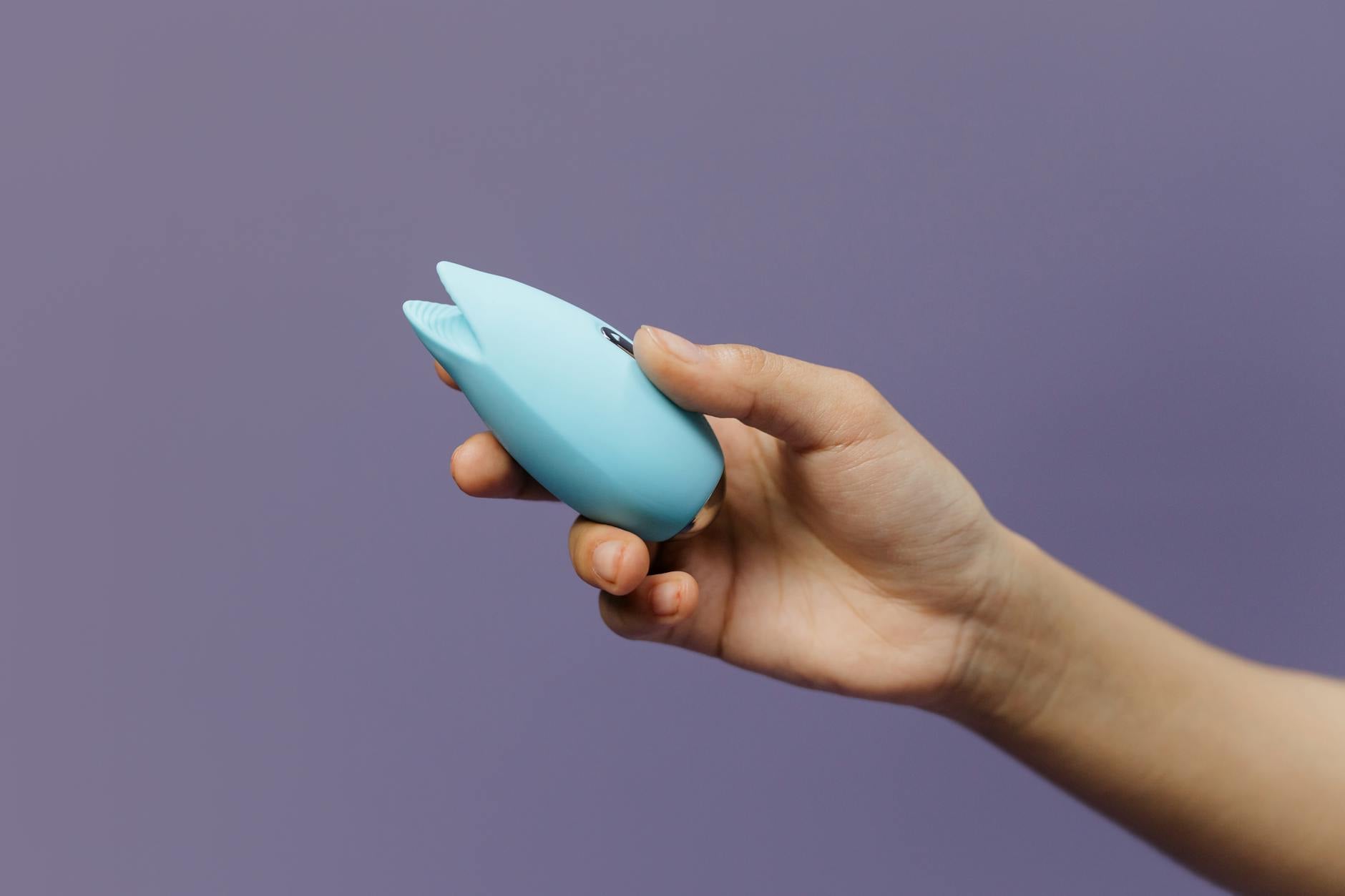
Photo by cottonbro studio on Pexels
Many people report that after a genuine mental health break, their first orgasms back are profound. Not necessarily intense. Just real. Connected. Like their body is saying "okay, I trust this again." That's worth the slower journey to get there.
The partner conversation, if there is one
If you're returning to sex with a partner, this is worth a conversation. Not a formal sit-down. But something real. "I took a break because I needed to. I'm ready to start exploring again, but slowly." That's the whole message they need.
If your partner has also been on pause, you're probably on sync. If they've continued while you stepped back, there's a mismatch in where you both are. That's worth naming. Lemon vibrators, or any tool, aren't a shortcut to fixing a mismatch. They're just part of how you rebuild together.
If a partner is pushing you back into physical intimacy before you're ready, that's a different problem. That's about boundaries. Tools don't solve that. Honesty does.
What usually surprises people
Most folks expect returning to sex after a break to feel rusty or awkward. Sometimes it does. But just as often, it feels clearer. When you've stepped back and done the internal work, pleasure can feel less tangled up in performance, people-pleasing, or old patterns.
You get to choose what it looks like now. If lemon clitoral vibrators are part of that, great. If they're not, that's fine too. The break wasn't a failure. It was a reset. And your body's response when you're ready is just information, not judgment.
When to pause again
There's also wisdom in taking breaks between breaks. If you notice pleasure starting to feel obligatory, or if you're using tools to feel something instead of because you want to, that might be a signal to step back again. Pleasure is supposed to feel optional. The moment it feels like maintenance, it's time to reassess.
This is why learning how to reconnect with your body after time apart matters. Reconnection is a skill. You get better at it each time.
The mental health piece that matters most
Using lemon sexual toys after a mental health break is actually about one thing: trusting yourself again. Your body. Your boundaries. Your yes and your no. The vibrator is just the vehicle. The real work is learning that stepping back doesn't mean you're broken, and returning doesn't mean you have to go faster than feels right.
If anxiety, depression, or trauma is still active, pleasure tools aren't a replacement for therapy. But they can be part of a healthy life alongside it. One where your mind and body are both allowed to heal.
People also ask
Is it normal to feel numb when returning to lemon vibrators after a break?
Completely normal. Numbness after stepping back typically comes from one of two places. First, your nervous system might still be in protection mode. It learned that opening up wasn't safe, so it's holding back until it feels more certain. Second, the gap in time means your tissue sensitivity and neural pathways need to rewake. Neither means you're broken. Both usually resolve with patient, non-pressured exploration. Stick with lowest intensity and give yourself at least 4-6 weeks before deciding something's wrong.
Can I use lemon clitoral vibrators too soon after a mental health break?
Yes, and it's worth waiting if you can. The temptation to jump back to tools is real, but solo hand exploration for at least 2-4 weeks gives your nervous system a chance to say "this is safe" before adding stimulation. Tools amplify sensation, which can sometimes bypass the permission-building phase your brain needs. If you do want to use them earlier, start at the absolute lowest setting and give yourself full permission to use it once and then not touch it for a week. No pressure. Just exploration.
What if my partner wants to resume sex but I'm not ready yet?
This is about communication and boundaries, not tools. A lemon vibrator won't bridge a mismatch in readiness. What will is a direct conversation. "I'm still in the process of reconnecting with my body, and I need you to be patient with that timeline." A partner who respects that is a partner worth staying with. A partner who pressures you is showing you something important about the relationship. Tools can help you both once you're aligned, but they can't force alignment that isn't there.
Does using lemon sexual toys mean I'm past my mental health break?
Not necessarily. Using a lemon vibrator is just exploration. It doesn't mean you're "healed" or back to normal. Some people use tools during a break. Some people use them months after. The break isn't over when you use a toy again. It's over when you feel internally ready and when your nervous system has done the work it needed to do. The tool is just one signal among many. Trust the bigger picture more than the single moment.
How do I know if I'm using lemon clitoral vibrators as escape versus genuine pleasure?
This is the hardest question and it matters. Escape usually feels fast, urgent, and followed by shame or numbness. Genuine pleasure feels slower, curious, and followed by some kind of contentment. If you're reaching for a lemon vibrator because you need to not feel something, pause. Your nervous system is trying to tell you it needs something different than stimulation. If you're reaching for it because you want sensation and you're curious, that's usually the real thing. The difference is subtle but your body knows it.
Is there a risk of getting "too dependent" on lemon vibrators after a break?
Dependency on a tool usually isn't really about the tool. It's about what the tool is solving for. If you're using a lemon clitoral vibrator to manage anxiety, that's worth examining with a therapist. If you're using it because you like how it feels and you want more pleasure in your life, that's healthy. The tool itself is neutral. Your relationship to why you're using it is what matters.
The truth underneath
Taking breaks is not failure. Needing time is not weakness. And coming back slowly is not giving up. Your body knows what it needs if you listen long enough to hear it. Lemon vibrators are just one language for that conversation. The real work is learning to trust your own voice again. That's where actual healing lives.
If you're navigating this transition and you want more support around emotional intimacy or relationship dynamics, reach out to us. Sometimes talking to someone who gets both the mental health and the pleasure side helps clarify what your next step actually is.