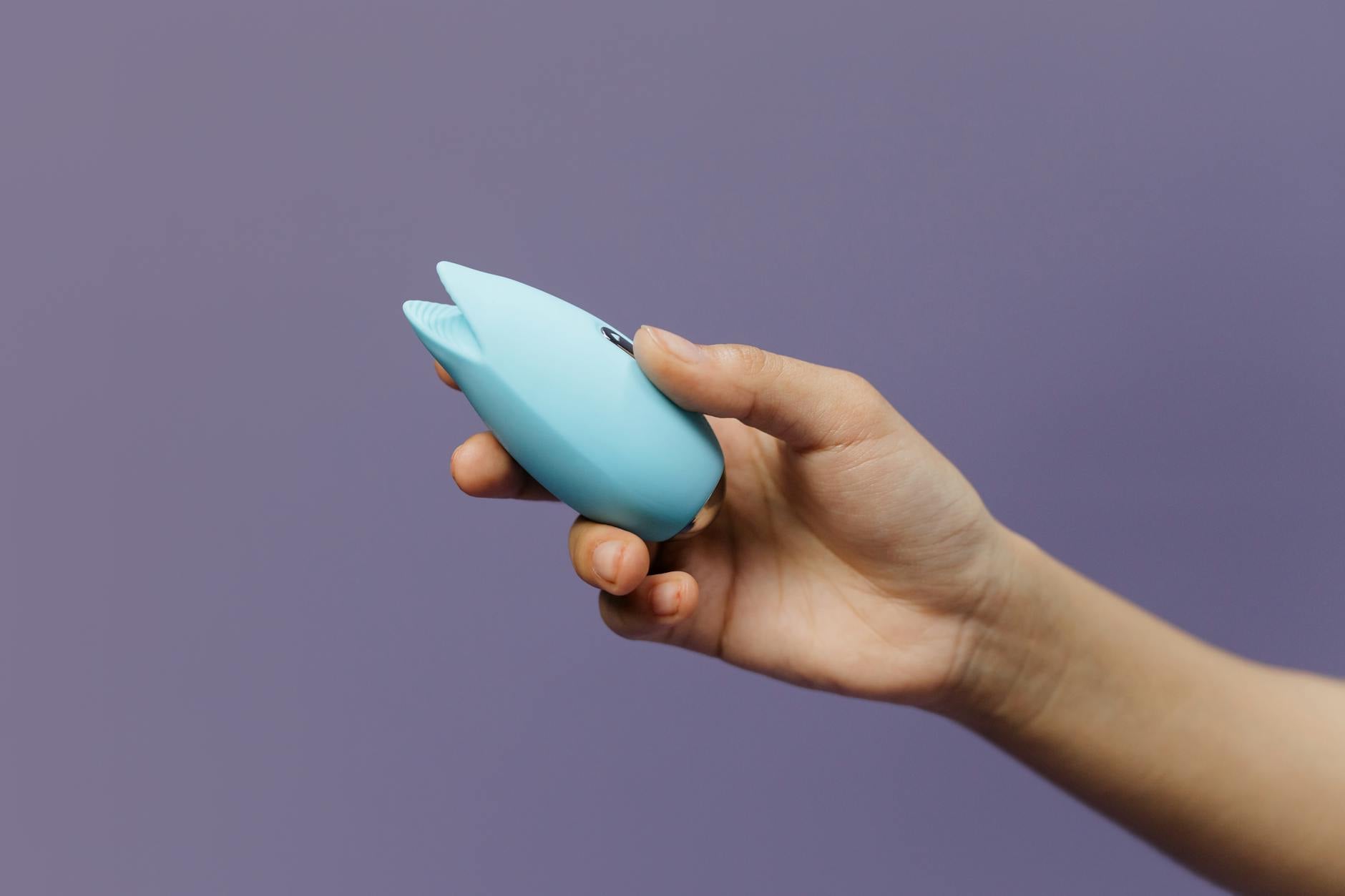
The thing nobody says about toys and partnership
Honestly? Introducing a lemon vibrator into partnered sex isn't about fixing anything. It's about adding a dimension that one person's body alone can't always create. That distinction matters because a lot of people bring toys to the bedroom as a backup plan ("maybe this will help"), when really they're more like a collaboration tool.
Here's what actually happens when you introduce a lemon clitoral vibrator thoughtfully: both partners relax. The person with the clitoris stops working so hard to orgasm. The partner stops monitoring whether it's happening. You both get to enjoy what's actually occurring instead of managing an outcome.
Before you even mention it: know your own answer
Don't bring up lemon vibrators because you think your partner wants you to. Bring them up because you do.
That difference is everything. When you want something, you can talk about it plainly. When you're offering it as medicine, you sound apologetic, and your partner hears "something's wrong." So before you have the conversation, use one solo. Know what patterns you like. Know how it feels. Know why you want it present during partnered sex specifically.
Maybe external stimulation is the only way you orgasm, and you'd like that to be part of sex with your partner rather than separate from it. Maybe you come faster with a lemon vibrator, and you want that ease in your shared time. Maybe you just like the sensation and you're curious about sharing it. Any of these is a solid reason.
The conversation itself (make it two sentences, not a TED talk)
Don't ambush your partner with this mid-sex. Pick a calm moment outside the bedroom and say something like: "I've been thinking about trying a lemon vibrator when we're together. I like how it feels, and I'd like to include it. How do you feel about that?"
Then stop talking. Let them respond. They might say yes immediately. They might need to think about it. They might have questions or hesitations. All of those are valid, and your job is to listen without defending the toy.
If they're hesitant, ask specifically what's making them uncomfortable. "Do you think I won't want your touch?" "Are you worried it means you're not enough?" "Does it feel clinical?" Once you know the actual concern, you can address it instead of guessing.
Common hesitations, and what actually helps:
- "I feel like I'll be replaced." The truth: lemon vibrators don't do what a partner does. They don't create emotional connection. They stimulate nerves. Your partner still creates pleasure through touch, presence, and attention. The toy is just a tool in the same toolkit.
- "It feels weird to watch." This is fair. You don't have to perform with it. You can use it under a blanket if that feels better. Or you can talk about what they'd actually like to see, and maybe it surprises both of you.
- "I'm not sure if I'll feel included." This one deserves real attention. You can offer concrete things: "I want you to help me position it" or "I want you to hold me while I'm using it" or "I want to use it on you after."
First time using one together: start smaller than you think
Don't pull out a lemon vibrator mid-sex and expect it to feel natural. Introduce it gradually.
Maybe the first time it's just there in the room. You mention it. You're together but not necessarily being sexual. The goal is for it to stop feeling like a big deal. A toy is a toy. It's about as dramatic as introducing a pillow.
The second time, maybe one of you holds it while you're both present. Not necessarily using it, just holding it, getting comfortable with its weight and the hum.
When you actually use it together for the first time, start at a lower setting. (Most lemon vibrators have multiple intensities.) Slower isn't worse. It's easier to build from. You're learning how your bodies respond when this new element is involved.
Here's what I see happen in partnerships: the person without the clitoris spends the first few sessions hyperaware of whether they're "doing it right." They're watching to see if their partner likes it. They're unsure what to do with their hands now that the external stimulation is handled. This is completely normal, and it passes once you've done it three or four times and realize nobody's judging anybody.
What actually works during partnered sex
Four setups I hear consistently help:
You use it on yourself while your partner is inside you. This requires some experimentation with positioning, but it's the most straightforward. You have control. Your partner can focus on connection. The vibration sometimes increases sensation for the partner too, which is a nice surprise.
Your partner uses it on you while you're together. This takes some communication because they need to know pace and pressure preferences. But if you guide them ("a bit slower," "move it there"), it can feel more connected than doing it solo.
You use it during foreplay and then pause it during penetration. Some people like to build up with the vibrator, then transition to penetrative sex without it. This gives your body a head start and often means you feel more present throughout.
You use it simultaneously on both of you. If both partners have external genitalia, some lemon vibrators and similar toys can stimulate both at once. This requires positioning flexibility but feels collaborative in a way that surprises people.
The emotional part (which is actually the biggest part)
When you introduce a toy thoughtfully, something shifts. The person who usually feels pressure to "make it happen" exhales. The partner feels less like they have to fix anything. You're suddenly on the same team using the same tool.
But this only happens if you check in. Mid-sex check-ins don't have to be clinical. "Is this good?" "Do you like this?" "Should we adjust?" These are pillow talk, not interrogation.
After sex, circle back: "What did that feel like?" "Do you want to try it again?" "Anything you'd change?" You're building a shared language around what feels good, and that's the actual work of deepening intimacy.
Some partners worry that using toys means something's wrong with the relationship. The opposite is true. Couples who talk about pleasure, experiment together, and keep adjusting what works are the ones who stay connected long-term. How Lemon Vibrators Help When You and Your Partner Use Them Together goes deeper into the relational side if you want more on that.
Why lemon vibrators specifically work well in partnerships
A lemon clitoral vibrator is designed for external stimulation, which means it's not taking up internal space or creating sensations that could conflict with what a partner's providing. It's complementary, not competing.
The suction and pulse patterns are also different from what hands or other toys create, so partners don't feel like they're watching you do something they could do themselves. It's genuinely adding something new to the experience.
When timing matters
Don't use a lemon vibrator for the first time when you're both stressed, tired, or if there's unresolved tension in the relationship. You need mental space to experiment without self-consciousness.
Best timing: when you've had a good stretch of connection. When you're both in a good mood. When neither of you has somewhere to be in 20 minutes. Pressure ruins this kind of exploration.
Some couples find that a lemon vibrator actually helps with mismatched desire or arousal timelines. If one partner takes longer to build arousal, the vibrator can help equalize that without either partner feeling like anything's wrong. How to Use Lemon Vibrators When Arousal Takes Longer to Build has more on that specific dynamic.
The after part (which sets up the next time)
After you've used a lemon vibrator together, clean it according to care instructions (usually just warm water and a gentle cleanser). Store it somewhere both of you know about. That normalization is important. A toy that's hidden in a drawer or treated like a secret feels different than one that's just part of your shared toolkit.
If it didn't go perfectly, that's normal. Sex is unpredictable. Sometimes your body doesn't respond the same way twice. Sometimes the angle isn't quite right. Sometimes you're just not in the mood. This isn't about the vibrator failing. It's about being human.
Most partnerships that introduce toys successfully do it multiple times before finding what actually works. You're not looking for perfect. You're looking for authentic and exploratory.
FAQ: Using Lemon Vibrators With a Partner
Will my partner feel inadequate if I use a lemon vibrator during sex?
Not if the conversation is framed right. The vibrator isn't replacing your partner. It's doing something your partner's body physically can't (sustained rhythmic vibration at that intensity). Position it as "I want this experience with you," not "I need this instead of you." Partners usually feel relief once they understand they're not being compared.
Is it normal to prefer a vibrator to partnered sex?
Yes. Some bodies respond more to vibration than to the sensations partnered sex creates. That doesn't mean partnered sex is bad or the relationship's broken. It means your body has preferences. The goal is integration, not replacement. Use a lemon vibrator as part of partnered sex, not instead of it.
How do I introduce a lemon vibrator if my partner isn't into toys?
Start smaller. Mention it in a low-stakes way outside the bedroom. Listen to their hesitation without trying to convince them. Most resistance comes from worry that something's wrong. Once they understand the toy is about expanding pleasure (not fixing a problem), resistance often softens. If it doesn't, respect that. You can revisit it later.
Can I use a lemon clitoral vibrator if my partner has a larger penis or if penetration feels uncomfortable?
Absolutely. A lemon vibrator on the clitoris and penetration are happening in different places, so size concerns don't apply. In fact, external stimulation during penetration often makes penetration feel more comfortable because the body's more relaxed and aroused. They work together.
What if my partner wants to use a lemon vibrator on me, but I don't know how to guide them?
Tell them exactly what you feel when you use it alone. "When I put it here and keep it steady, that feels amazing." "I like pattern three better than pattern five." "A little slower." Start with simple direction, and as you both get comfortable, communication usually becomes less necessary. They'll start noticing what makes your body respond.
Is it okay to use a lemon vibrator every time we have sex?
Yes, if that's what you both want. It's just a tool. Using it consistently doesn't mean you're dependent on it. Some couples use toys every single time. Others use them once a month. There's no right frequency. The right frequency is whatever keeps both partners satisfied and connected.
The bottom line
Lemon vibrators aren't a fix for relationship problems or intimacy issues. They're also not a threat. They're a tool that makes certain sensations possible. When you introduce one thoughtfully, with honest communication and realistic expectations, what often happens is both partners relax. You stop performing for each other and start exploring together. That shift is where the real deepening happens.
Your partner's touch still matters. Your presence still matters. The connection is still what makes it meaningful. The vibrator just makes it easier to access all of that without exhaustion or self-consciousness getting in the way.