
Here's the thing about libido drops
They happen. Not as punishment, not as a sign you've broken something, just as a normal part of living in a body that ages, gets stressed, shifts through seasons. Hormones dip. Life gets loud. Your brain is full. And somewhere in that chaos, arousal goes quiet.
Most people assume this means they need to want sex more, or faster, or with more intensity. Actually, what often works better is permission to want it differently. That's where a lemon vibrator comes in.n
Why lower libido isn't actually about laziness
When people describe low libido, what they usually mean is that the usual pathways to arousal have stopped working. The triggers that used to spark desire now feel flat. Your body isn't responding the way it used to. And instead of investigating what's changed, we assume something's wrong with us.
Physiologically, low libido can trace back to stress cortisol staying elevated, dopamine fluctuation, thyroid shifts, medication side effects, or simple depletion. Psychologically, it often means you've disconnected from pleasure altogether. You're not avoiding sex because you dislike it. You're avoiding it because you've forgotten what wanting feels like.
A lemon vibrator is useful here because it's gentle enough to coax sensation back without demanding arousal. It doesn't ask you to be turned on. It helps turn you on.
The neuroscience of reawakening sensation
When arousal has been dormant for months, your nervous system needs a signal that pleasure is safe again. That signal travels through nerve pathways in the clitoris to the brain. If those pathways have gone quiet, direct manual touch often feels either too intense or too muted to register.
Lemon clitoral vibrators use air-suction stimulation, which works differently than a traditional vibrator. Instead of friction, it creates gentle pressure waves that mimic oral sex. This means the sensation is novel enough to bypass the numbness but gentle enough not to overwhelm. Your nervous system notices something interesting is happening without feeling threatened.
The suction pattern also works at a frequency that matches the body's natural response rhythm better than most vibrations do. That alignment helps your arousal chain reactions actually fire, rather than sputter.
Why starting small actually works
I recommend beginning with the lowest intensity setting when you're rebuilding. This isn't about being timid. It's about retraining your nervous system to recognize pleasure cues.
If you go straight to high intensity after months of numbness, two things happen. First, your body might register it as pain or discomfort rather than pleasure. Second, you'll be chasing that same intensity the next time, which defeats the point of reconnection.
Start at the gentle setting. Spend 10-15 minutes just noticing sensation. What does the pressure feel like? Is there a particular spot that feels more responsive? Does the sensation shift if you move slightly? This isn't performance. It's archaeology. You're excavating what turns you on.
Solo time is the fastest route back
When you're rebuilding libido, adding another person into the equation actually slows progress. Here's why. If you're using the session to satisfy a partner, or prove something to yourself, or meet an expectation, you're not actually present with your own sensation. You're performing arousal instead of experiencing it.
Solo exploration with a lemon vibrator removes that pressure entirely. No one's waiting for you to orgasm. No one's affected if you don't. The only goal is noticing what your body responds to.
Allocate 15-20 minutes alone. Somewhere you won't be interrupted. No phones. Start with a setting around level 2 or 3 on a lemon vibrator, just exploring. Some sessions will be arousing. Some will be neutral. Both are data. Neutral sessions tell your brain that pleasure exploration is safe, which gradually rewires the numbness response.
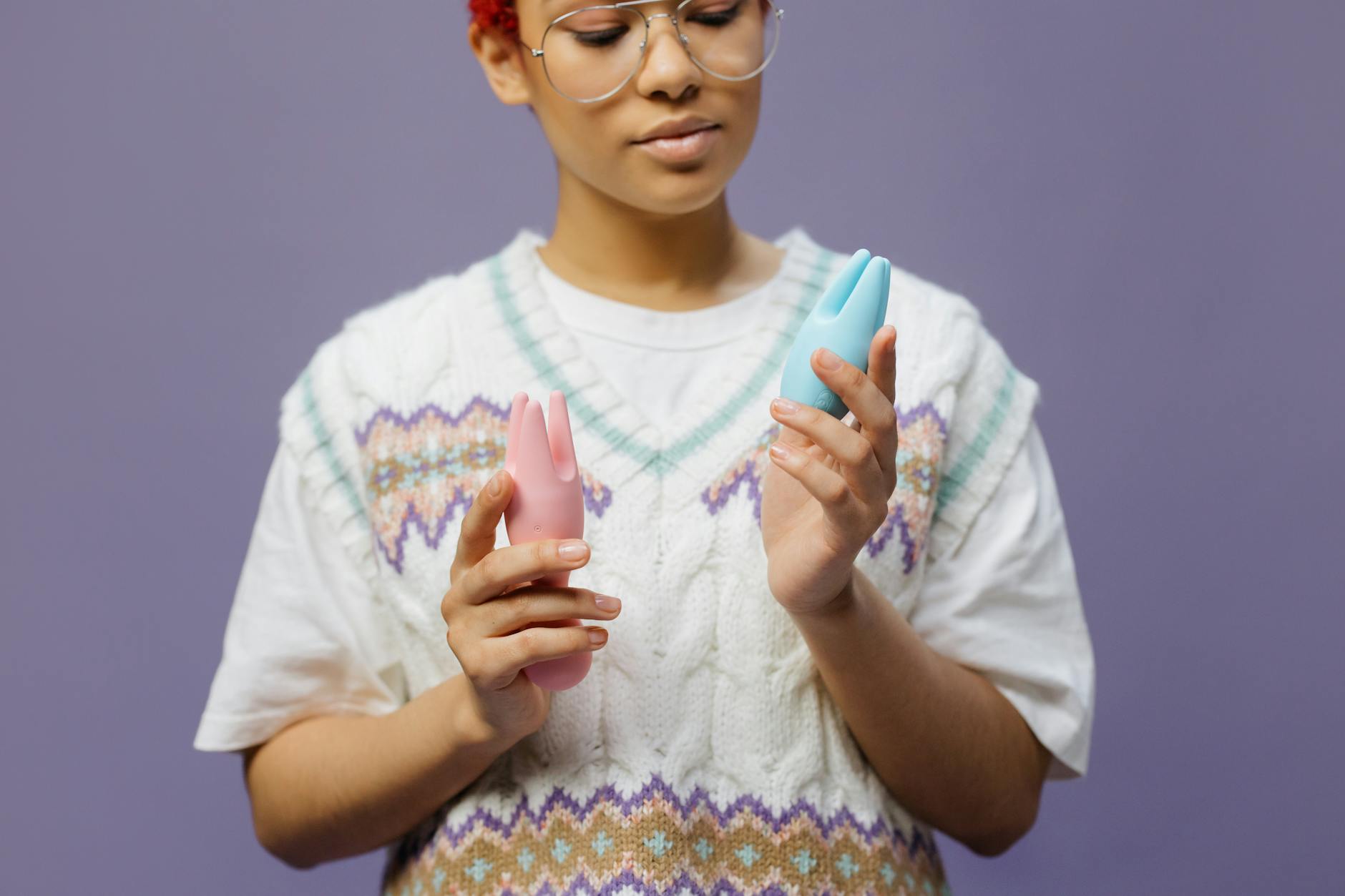
Photo by cottonbro studio on Pexels
The role of storytelling and mental framing
Do not underestimate how much your thoughts shape arousal. If you're using a lemon vibrator while mentally narrating a story of failure. ("This should be working faster." "I used to be more interested than this." "My partner must be frustrated.") then your parasympathetic nervous system stays locked in fight-or-flight mode.
Instead, deliberately shift the mental frame. This is exploration, not performance. This is reconnection, not recovery. Notice the difference. One carries shame. The other carries curiosity.
Many people find that thinking about fantasy, desire, or scenarios that used to engage them helps wake up arousal. Others find that focusing entirely on pure physical sensation works better. Neither is wrong. The point is intentional attention, not autopilot numbness.
When to involve a partner again
Once you've logged a few solo sessions where you've noticed genuine arousal shifting, not necessarily orgasm but actual sensation movement, you can consider bringing a partner back in.
The framing matters. You're not trying to prove you're fixed. You're inviting them into a new phase of reconnection. That might mean they hold the lemon vibrator while you guide them on what feels good. It might mean they're present but not directly involved, understanding that this is your recovery timeline, not a joint performance.
Honestly, many couples find that rebuilding libido together is the place where deeper intimacy actually starts to happen. Because it forces you to communicate about pleasure in specific language rather than just assuming the old rhythm will restart.
Managing expectations around orgasm
Here's a trap I see constantly. Someone assumes that a lemon vibrator will instantly trigger an orgasm, proving that their libido is "back." When that doesn't happen on session one, they conclude it didn't work.
Orgasm is not the marker of successful arousal reconnection. Sensation is. Curiosity is. The ability to feel pleasure without judgment is.
Many people rebuilding libido report that orgasms feel different for months. Shallower. Slower to build. Sometimes not arriving at all even when sensation is clearly present. That's not failure. That's your nervous system re-calibrating. Push through it without forcing, and orgasm usually returns on its own timeline.
Practical setup for success
Choose a time when you're not exhausted. Libido rebuilding requires mental real estate. If you're running on fumes, your nervous system can't attend to subtle sensation.
Choose a physical space where you genuinely feel safe and unobserved. This matters more than comfort level. If you're halfway worried someone will interrupt, arousal won't develop.
Have water nearby. Hydration helps physical arousal flow. Have your lemon vibrator charged. Dead batteries are a momentum killer.
Consider timing with your cycle if you menstruate. Many people find rebuilding arousal easier in the follicular phase, when estrogen rises naturally. But don't make this a rule. Some people have success any time. Track what works for your body.
When to seek additional support
If after 4-6 weeks of consistent solo exploration with a lemon vibrator you're still experiencing complete numbness, or if libido loss arrived suddenly alongside other symptoms like fatigue or mood changes, get a medical workup. Low libido can signal thyroid issues, hormonal imbalance, or depression that needs treatment beyond a vibrator.
Likewise, if the numbness feels entangled with relationship distance or unresolved conflict, a couples' therapist can help separate the mechanical issues from the emotional ones. A lemon clitoral vibrator is a great tool for physical reconnection. It's not a substitute for addressing relational rupture.
But for most people experiencing a libido dip. for most people experiencing a libido dip, lemon vibrators offer a low-pressure path back to sensation. No performance. No shame. Just your body remembering how to want.
FAQ: Rebuilding pleasure after lower libido
Can a lemon vibrator work if I haven't felt aroused in months?
Yes, and that's actually when they're most useful. Your nervous system needs a signal that pleasure is safe. Lemon clitoral vibrators provide gentle, novel stimulation that can bypass numbness. Start at the lowest setting and approach it as exploration, not a test of whether your libido is fixed.
How often should I use a lemon vibrator to rebuild libido?
I recommend 2-3 times per week for the first month. More than that and exploration becomes routine obligation. Less than that and your nervous system doesn't get consistent signals that arousal is worth investing in. Quality over frequency.
Is it normal if I don't orgasm the first few times using a lemon vibrator?
Completely normal. Orgasm isn't the point when you're rebuilding. Sensation is. Many people notice feeling present in their body for the first time in months, even without climax. Trust that process.
Can I use a lemon vibrator with a partner when rebuilding libido?
Absolutely, but ideally after you've had a few solo sessions first. That solo time removes performance pressure and helps your body remember what arousal feels like independently. Once you've rebuilt that foundation, partners can be part of the experience.
What if my partner doesn't understand why I need solo time to rebuild libido?
This conversation is worth having explicitly. Frame it as research, not rejection. You're collecting data about what your body responds to, and that data will actually improve your shared intimate life once you've got it. A supportive partner understands this is rebuilding, not avoidance.
How do I know if my low libido needs medical attention?
Seek a doctor if the loss was sudden, if it arrived with other symptoms like fatigue or mood changes, or if it persists beyond 6-8 weeks of consistent exploration. Your GP or a menopause specialist can rule out thyroid, hormonal, or medication factors that a vibrator can't address alone.