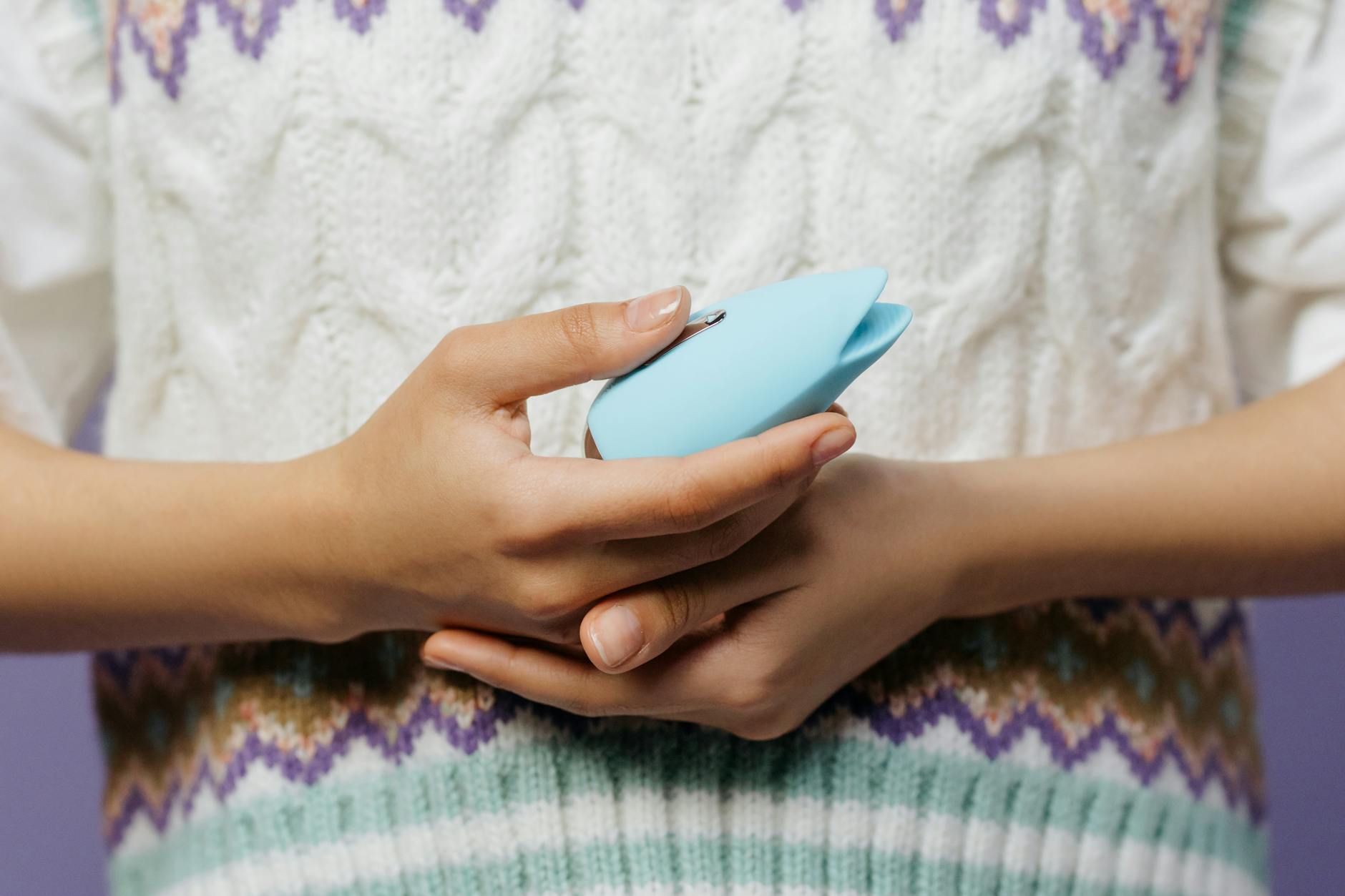
Let's be real about condoms and sensation
Condoms are non-negotiable for many relationships. They're effective, accessible, and essential for STI prevention. But let's also be honest: they dull sensation for a lot of people. The barrier between skin and skin changes everything. For some, it barely registers. For others, it's the difference between feeling something and feeling almost nothing at all.
This isn't a personal failing. It's physics. The clitoris has thousands of nerve endings packed into a tiny space, and they're designed to respond to direct, nuanced touch. A condom, even a thin one, flattens that signal. If you've noticed your clitoris feeling numb or disconnected during partnered sex with condom protection, you're not alone. And more importantly, you have options.
Why condoms specifically dull clitoral sensation
The clitoral glans is exquisitely sensitive because of its nerve density. Those nerves respond to subtle variations in pressure, texture, and movement. A condom acts as an insulating layer. It mutes vibration, texture, and the proprioceptive feedback your body normally gets from direct contact.
Different condom materials affect this differently. Latex tends to feel thicker. Polyurethane and nitrile are thinner but still create a barrier. Even the thinnest condoms available remove a meaningful amount of sensation for people with sensitive clitorises.
Temperature also factors in. Condoms sit between your skin and your partner's skin, creating a microclimate that's warmer than exposed skin but less responsive to direct heat transfer. This affects arousal buildup, which in turn affects how quickly sensation returns.
The brain also plays a role. If you're thinking "This doesn't feel like much," your nervous system listens. Anticipation and mental engagement drive physical response. Condom numbness often triggers a feedback loop: reduced sensation leads to less arousal, which leads to even less sensation.
How lemon clitoral vibrators work differently with condoms
This is where air-suction lemon vibrators shift the equation. Unlike traditional vibrators, which rely on the friction and micro-vibrations you feel through direct contact, lemon vibrators use gentle suction combined with light pulsation. Suction works through a different neural pathway than friction. It stimulates the clitoris without needing the same level of direct pressure.
When you're using a lemon vibrator with a condom, the suction mechanism is more effective than traditional vibration at cutting through that barrier. The pneumatic action creates a sensation that's less dependent on texture and more reliant on pressure changes. It's why many people report that lemon vibrators feel surprisingly effective even when direct stimulation feels muted.
For partnered sex with condoms, this matters because you get external stimulation that actually registers. A lemon clitoral vibrator can restore sensation during intercourse or manual partnered play in a way that condoms alone won't.
Before you use a lemon vibrator with condoms
A few practical things first. If you're using a lemon vibrator during partnered sex with condom protection, keep the vibrator accessible and discuss it beforehand. "I'd like to use my vibrator during sex" is a complete sentence. You don't need to apologize for or explain away wanting to feel good.
Position matters. If you're using a lemon vibrator during partnered intercourse, you'll need access to your clitoris. Woman-on-top positions, side-by-side, or positions where your partner isn't directly covering your vulva work best. Many couples find this actually improves the experience because it removes pressure from the person wearing the condom to single-handedly generate all the sensation.
Timing also shifts. Warm up longer before introducing the vibrator. Spend 10 to 15 minutes on foreplay before bringing in a lemon vibrator. This gives your nervous system time to wake up and become more responsive. The more aroused you are before you start, the more sensation you'll feel.
Lubrication becomes important. Water-based lubricant helps the suction mechanism of a lemon vibrator work more efficiently. It also reduces friction during condom use, which can make the entire experience feel less muted. Apply lube generously to the clitoris before using the vibrator.
Strategy one: use the lemon vibrator as foreplay
Start with external stimulation before condoms enter the picture. Spend 20 to 30 minutes using your lemon vibrator solo or with partner involvement before moving to penetration. This builds arousal substantially and primes your nervous system to feel more even when a condom goes on.
During this foreplay phase, you're also building mental engagement. Your brain becomes invested in pleasure. That mental state carries forward when condom protection begins.
Many people find they can reach orgasm during this foreplay phase, which takes pressure off the partnered sex itself. If you've already had one orgasm, the second and third often come faster and feel more integrated into partnered play.
Strategy two: use the lemon vibrator during penetration
If you want direct clitoral stimulation during condom-protected sex, a lemon vibrator held at a low setting works well. Your partner can hold it while entering you, or you can guide it yourself. Start at pattern one or two, low intensity.
The suction doesn't work as well through a condom as it does on bare skin, so you might feel more of a gentle vibration than a true suction effect. That's fine. Even that level of stimulation often feels more effective than condom-dulled direct touch.
Communicate throughout. "Faster, slower, a little higher, a little lower." Partnered use of a lemon vibrator is a conversation, not a performance.
Strategy three: build sensation gradually post-condom
Honestly though, some people find they want to finish without condom protection or they want additional stimulation after penetration ends. If your partner has had an orgasm and you're still building, moving away from condom-protected penetration and returning to focused clitoral work with a lemon vibrator often works.
If you move away from condom protection, have a clear plan: pull out, remove the condom carefully, wash hands if needed, then return to stimulation. Some couples keep their lemon vibrator right there on the bed so the transition is quick.
This strategy requires trust and communication. It's not about your partner failing to satisfy you. It's about meeting your actual nervous system where it is. Condoms don't just affect women. They also reduce sensation for people with penises. Everyone in the situation is working with less feedback.
Realistic expectations about sensation recovery
Using a lemon vibrator won't make condom sex feel identical to unprotected sex. That's not the goal. The goal is pleasure that's actually accessible within the constraints of safe sex.
Most people report that combining condoms with lemon vibrators gives them about 70 to 80 percent of the sensation they'd feel without condom protection. That's a meaningful difference compared to condoms alone.
Sensation also improves with practice and familiarity. The first time you use a lemon vibrator with a condom, you're managing novelty plus the technical aspects. By the fifth or tenth time, your nervous system knows what to expect. Response improves.
Mental state matters enormously. Stress, resentment about needing protection, body image concerns, or relationship friction will all dampen sensation regardless of what toy you use. If sensation numbness is tied to emotional distance, that's a separate conversation from the physical technique.
When numbness signals something else
If you've always felt muted sensation during condom use and lemon vibrators help, great. You've found a solution that works.
If you used to feel strong sensation with condoms and suddenly don't, that's worth investigating. Changes in sensation can signal hormonal shifts, medication side effects, vascular changes, or relationship dynamics that are affecting arousal. These aren't toy problems. A toy can't fix them.
If sensation remains completely absent even with focused lemon vibrator use over several sessions, talking to a healthcare provider makes sense. This is especially true if numbness happens across multiple partners or contexts. A pelvic floor physical therapist or gynecologist trained in sexual health can rule out underlying vascular or neurological factors.
But for most people, the combination of lemon clitoral vibrators and some strategic positioning and communication transforms condom-protected sex from sensation-muted to genuinely pleasurable.
The bigger picture
Condoms and sensation loss don't have to be a package deal. You deserve pleasure and protection. A lemon vibrator isn't a workaround or a compromise. It's a tool that works with your actual body and the choices you're making. Using one is taking yourself seriously.
If you're not sure where to start, our buying guide walks through how to pick the right lemon vibrator for your preference. And if you have questions about fit or technique, reach out. We're here to help.
People also ask
Can I use a lemon vibrator through a condom?
Yes. Suction-based lemon vibrators are actually more effective through a condom barrier than traditional vibrators because they rely on pressure changes rather than friction. You won't feel the full suction sensation you'd feel on bare skin, but the effect is still noticeable. Many people report that even muted suction beats traditional vibration for sensation during condom use.
Do condoms make clitoral numbness worse for everyone?
No. Some people barely notice a difference. Others report significant reduction in sensation. Sensitivity varies based on condom thickness, material, your individual nerve density, arousal level, and mental engagement. If you're someone for whom condoms substantially reduce sensation, you're not defective. Your nervous system is just very responsive to barrier differences, which is actually not unusual.
How long does it take to adjust to reduced sensation with condoms?
Most people adjust within a few sessions. Your nervous system recognizes patterns and adapts. By the fifth or sixth time, sensation typically feels less shocking. Using a lemon vibrator during this adjustment period accelerates the process because you're adding a reliable source of stimulation while you're acclimating.
Should my partner feel bad that condoms reduce my sensation?
No. This isn't about them. Condoms reduce sensation for both partners physiologically. If your partner is interpreting this as personal failure, that's a relationship communication issue, not a sexual technique issue. A quick conversation usually helps: "Condoms are important to me. I want to use them. I also want to feel good during sex. A lemon vibrator helps bridge that gap. This isn't about you."
Can lemon vibrators replace condoms for sensation?
Not as contraception or STI protection. But functionally, they restore enough sensation that many people experience condom-protected sex as fully satisfying. The goal isn't to recreate unprotected sensation. It's to reach pleasure that's actually accessible within your real choices.
What if lemon vibrators don't help with my numbness?
Then explore other avenues. Thinner condoms might help. Different condom materials feel different. Some people respond better to external vibrators or wand vibrators than suction toys. And if numbness is sudden or total, that's worth discussing with a healthcare provider trained in sexual health. The issue might be hormonal, vascular, or related to medications rather than the condom itself.