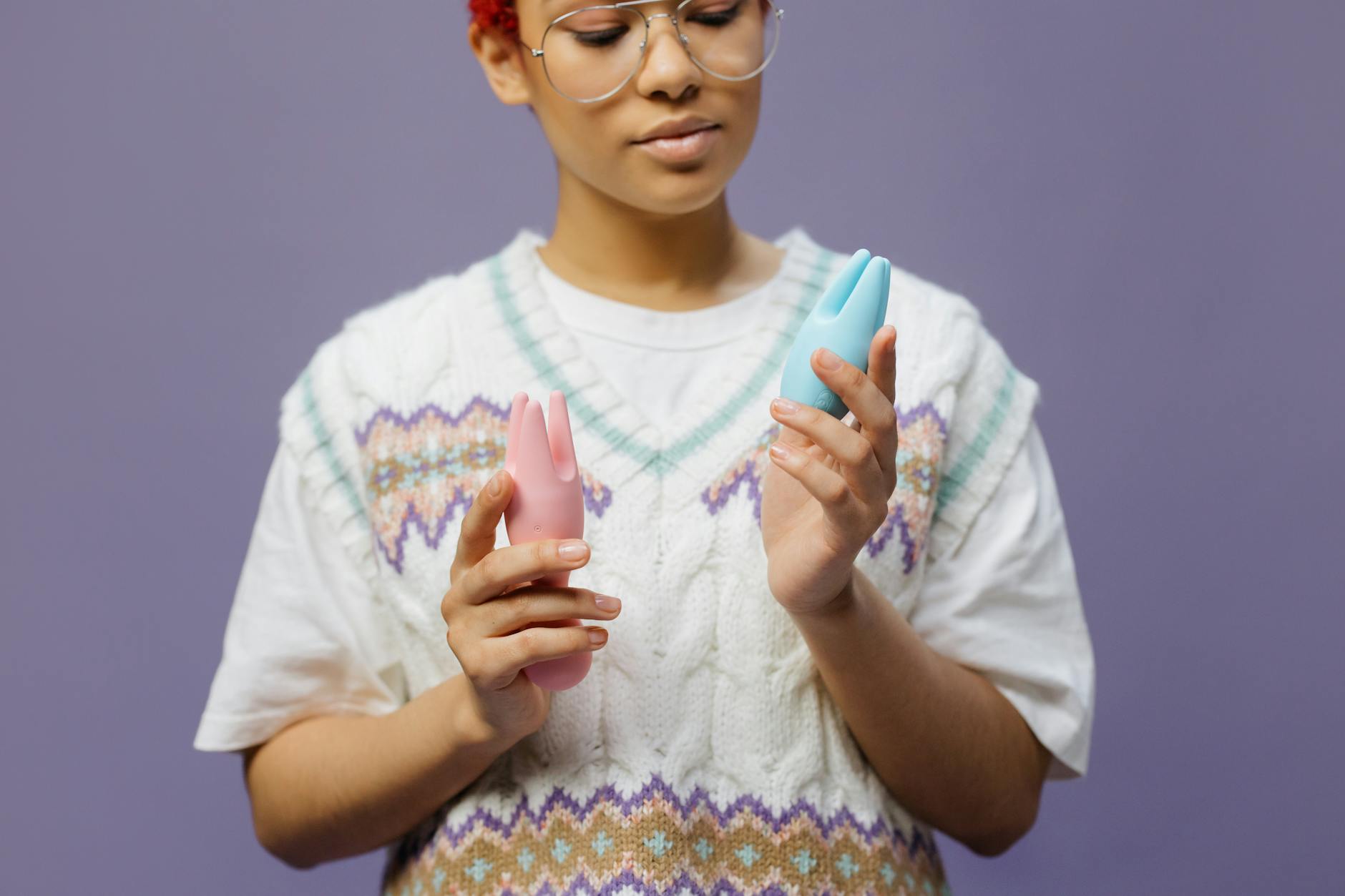
Let's talk about the real anxiety
You want to introduce a lemon vibrator to your new partner. Not because something is wrong. But because you know what feels good, and you want them to be part of that. The anxiety isn't about the toy itself. It's about the conversation. Will they feel replaced? Insulted? Pressured? Will it make things weird?
Here's what I've learned from working with couples through this exact transition: the awkwardness lives in the silence, not in the toy. The moment you speak about it directly, with clarity and warmth, everything shifts.
The timing conversation is different than you think
Most people wait too long. They wait until the moment of, which turns an introduction into a surprise, and surprises feel like accusations. "Why are you bringing this up now? What have you been wanting that you didn't tell me?"
Instead, bring it up somewhere neutral. Not in bed. Not during sex. Sometime in the next week or two, when you're both relaxed. A walk, a meal, the couch. The setting should feel like a regular conversation, because it is one.
You don't need to script it. But here's the shape of it.
The actual words
Start with something true and direct. "I've been thinking about trying something new with you, and I want to be honest about it instead of just springing it on you." That's it. You've signaled that you respect them enough to talk first. You've also made clear this is collaborative.
Then explain what you want to bring in and why. Not what's missing. Why you want this. "I know my body really responds to clitoral stimulation, and I want to explore that with you. There's a lemon vibrator I've been curious about. I'd like to try it together."
Notice what's not there: you're not saying "I can't orgasm without this" or "Your touch isn't enough." You're saying "I want to expand what we do together." Those are wildly different sentences, and the second one is true.
What they might say back (and how to land it)
They might feel a spike of self-doubt. That's normal. They might ask, "Are you not satisfied?" or "Do you not like what we're doing?" This isn't rejection. It's fear. You can address it straight.
"I'm really satisfied. This isn't about you not being enough. It's about exploration. I want to feel different things, and I want you there for that. That's why I'm bringing you into it instead of just doing it alone."
They might also be curious. "Cool, tell me more." In which case, you describe a lemon clitoral vibrator in simple terms. It's a toy that uses gentle suction on the clitoris. Some people call it a sucker, but it's not really sucking. It's a different sensation. It often gives people the most intense orgasms they've experienced.
You can show them what you're thinking about. Look at the Lemon vibrator together on your phone if that feels natural. That demystifies it. It stops being something scary and starts being something you're choosing together.
The first time should feel low-pressure
Now comes the part most people get wrong. They introduce the toy and immediately try to use it in the middle of sex. That puts pressure on everyone. What if it doesn't feel good? What if someone gets distracted? What if it breaks the rhythm?
Instead, try it in a lower-stakes moment. Maybe next time you're intimate, but not during the main event. You're already touching each other, things are warm and open, and you say something like, "Want to see what this feels like?" You use it on yourself while they're watching. Or they watch while you guide your hand. No performance pressure. Just exploration.
Most people find that once they see it works, once they feel how their partner responds, the weirdness evaporates. Their partner is usually relieved. The relief comes from seeing you feel good, and from understanding that this is about pleasure, not critique.
If they're hesitant, that's not a refusal
Some partners need more time. Some have their own anxieties about toys. Some worry they'll be expected to use it constantly. Some grew up thinking about sex toys as solo activities, and it takes them a minute to expand that mental category.
Your job is not to convince them. Your job is to stay warm and clear. "I really want to explore this. I'd love for you to be part of it. But I'm not going anywhere. We can take our time." Then you actually take your time. You don't bring it up every week. You let it settle.
The partners who come around do it on their own timeline, when curiosity overcomes resistance. The ones who never come around usually come around to you using it solo, and then they're watching, and then they're helping.
What actually happens when you finally use it together
Most of my clients report that the first time is less about the toy and more about the intimacy of being that honest. Someone brought something they wanted, they explained why, and their partner trusted them enough to try. That's hot. That's connection.
The toy itself? It usually feels incredible. People often have an orgasm they didn't expect. Their partner watches them have a different kind of pleasure than they've had together before. And instead of feeling threatened, they feel in on something.
If it doesn't feel amazing the first time, that's fine too. You've opened a conversation. You now know you can talk about what you want. That stays open.
The logistics part matters too
One practical thing: if you're using a lemon sexual toy like the Lem for the first time, your partner will probably want to understand it. Let them feel it (without turning it on). Explain how to use it. If you're the one guiding it, show them the pattern. If they're guiding it, tell them what feels good.
This is not boring. This is information that makes the experience better for both of you. And it keeps the focus on collaboration instead of performance.
When to introduce lemon vibrators matters
In a brand new relationship (first few weeks), this conversation might feel premature. You haven't built enough trust yet. Wait until you're a few months in, until you've had vulnerable moments, until you know they're someone worth inviting into your pleasure.
In a longer relationship, this conversation becomes easier because you've already navigated other difficult topics. You know how your partner responds to honesty. Use that same rhythm.
Timing varies. But the principle is the same: speak before you spring.
The aftermath conversation
After you've tried it, check in. Not to death. Just a quick, "How was that for you?" If they loved it, great. If they were neutral, fine. If they felt something more complex, listen. Some partners feel emotional about toys for reasons that have nothing to do with you.
You've now established that toys are part of your intimate world together. That becomes the new normal. You can bring them in more often, or save them for special moments, or just leave it open. You get to decide.
Why this matters
Introducing a lemon vibrator to a new partner teaches both of you something important: you can ask for what you want, and the person you're with can hear you. That's the foundation of every good sexual relationship. The toy is almost secondary.
So speak. Be clear. Be warm. And trust that a partner who loves you will want to understand you.
People also ask
How do I know if my partner will be open to lemon vibrators?
You don't, fully. But you can look for signals. Have they talked openly about sex before? Have they brought up their own desires? Do they seem curious rather than rigid? Those are good signs. The only real way to know is to ask. And if you can't ask them, that's useful information too.
Should I ask permission before bringing a lemon clitoral vibrator into the relationship?
Yes, I'd say so. Not because you need their permission to own toys. But because you're inviting them into the experience with you. Respect that invitation deserves a conversation first. If you're using it solo, that's your business. If you want them involved, ask.
What if my partner thinks lemon vibrators mean I don't find them attractive?
Then you've got a reassurance conversation ahead. You tell them the truth: toys expand pleasure, they don't replace people. You're attracted to them. You want more with them, not instead of them. If they can hear that, great. If they can't, you might need a few conversations to rebuild that trust. This is worth doing, because it matters long-term.
Is it weird to ask my partner to help choose which lemon vibrator to get?
No. It's actually one of the best moves you can make. When someone gets to choose with you, they feel ownership. They're not watching you bring in a mystery toy. They're building something together. You look at the Lemon or other clitoral vibrators, you talk about what appeals to you both, and you make the choice as a pair.
How do I bring up lemon sexual toys if my partner and I have never talked about sex directly?
Carefully, and starting somewhere safer. You might start by asking what they like, what feels good to them, what they've been curious about. Get them talking first. Then you share something you've been thinking about. You're building a culture of honesty, not just springing a toy on someone who's never had that conversation.
What if my partner wants to try lemon vibrators but I'm nervous?
Take your time. You don't have to jump in immediately. Use it on yourself first. Get comfortable. Let them watch if that feels okay. Nervousness often comes from vulnerability, and that eases with repetition and trust. This is not a race.
Final thought
The partner you want is the one who hears you ask for what you want and leans in. Introducing a lemon clitoral vibrator isn't just about pleasure. It's a test of whether you can be honest with each other. And if you pass that test, everything else gets better.
If you're working through relationship communication in other areas too, how to introduce toys for couples might help. And if you're nervous about the physical side, easing into clitoral toys has specific strategies.