
When relationship stress kills desire before anything else does
Let's be real. When your partnership feels distant, disconnected, or chronically tense, sex isn't going to happen. Not because your body broke. Not because you stopped loving your partner. But because your nervous system is in a permanent state of low alert, and arousal requires safety.
This is one of the most common reasons I see low libido in my practice, and it's also one of the most fixable. The trap is waiting for the relationship to fix itself before you touch pleasure again. That almost never works. What actually works is the opposite.
Why stress and desire are neurologically incompatible
Your brain can't be in both states at once. Arousal requires the parasympathetic nervous system to dominate, which is the "rest and digest" part of your biology. Chronic relationship stress keeps the sympathetic nervous system active, which is the fight-or-flight mode.
When you're arguing regularly, feeling unheard, or living with unresolved tension, your body is in a perpetual state of vigilance. The cortisol and adrenaline circulating through your bloodstream aren't compatible with the relaxation and trust that sex requires. This is especially true if the relationship stress involves feeling emotionally unsafe with your partner.
Here's what makes this tricky: you can't just "decide" to relax into arousal while the underlying dynamic stays unchanged. But you also can't wait for a perfect relationship before reconnecting with your own pleasure.
The case for solo pleasure during relationship turbulence
Using a lemon clitoral vibrator on your own while things feel strained isn't escapism or a sign you've given up. It's actually strategic. Here's why.
When you're solo, you control the entire environment. No pressure to perform. No worry about your partner's pace or preference. No vigilance about whether they're feeling satisfied. That removal of relational pressure is profound. Your nervous system can finally downshift.
Second, reconnecting with your own pleasure reminds your body what arousal feels like. After months of low desire, your brain can almost forget. Solo sessions with a lemon vibrator essentially reboot your arousal circuitry. You're not trying to feel something for someone else. You're remembering what it feels like to feel something for yourself.
Third, and this surprised many of my clients, pleasure on your own terms often shifts your mood and outlook. One good orgasm doesn't fix a relationship. But it does shift your nervous system state temporarily, which gives you access to a clearer head when you actually need to have difficult conversations.
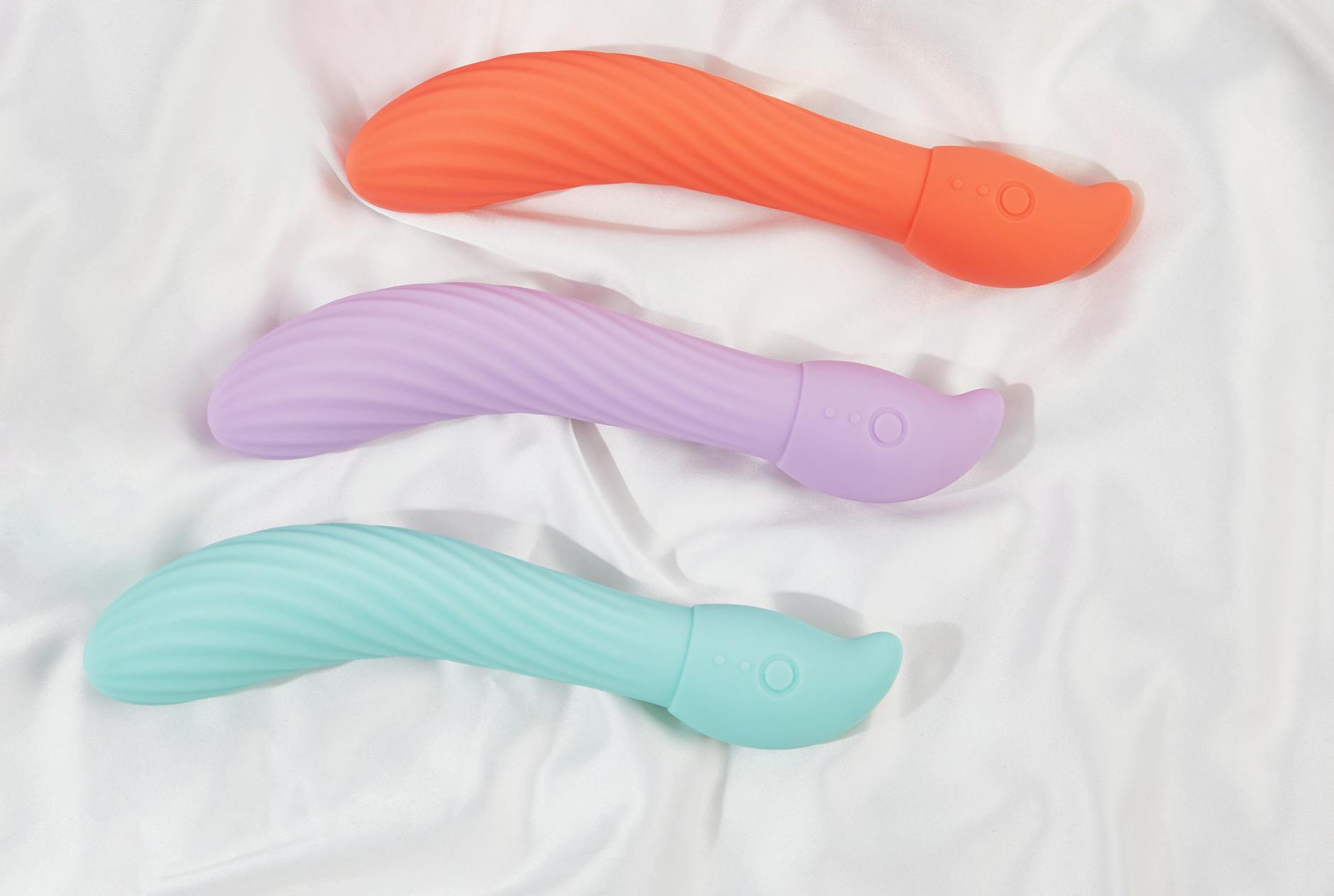
Photo by IFONNX Toys on Pexels
How lemon vibrators specifically help when stress is high
The design of a lemon clitoral vibrator is particularly useful during high-stress periods. Unlike traditional wand vibrators or rabbit designs, the suction mechanism on lemon vibrators doesn't require the same level of active arousal to feel good. Your clitoris doesn't need to be engorged or hypersensitive for suction to work.
This matters because under stress, your body often isn't producing the same level of natural lubrication or genital blood flow. A lemon vibrator bypasses that bottleneck. The suction stimulates the nerve endings directly, which means pleasure is accessible even when your body hasn't fully warmed up.
The learning curve is also gentler. If you haven't masturbated in a while because of low desire, starting with something that feels too intense or requires too much from your body can reinforce the"I don't want this" feeling. A lemon vibrator at a lower setting feels almost nurturing by comparison. Pattern 1 or 2 is often enough to kickstart arousal when your baseline is low.
Setting yourself up for success when stress is ambient
Timing matters more than you'd think. The worst time to try solo pleasure is when stress is active and acute. If you just had an argument, don't immediately retreat to masturbation. Your nervous system is still flooded with stress hormones. It won't work, and it might feel frustrating or worse.
Instead, build in a transition period. Go for a walk. Take a shower. Do something that signals to your body that the threat has passed. Twenty minutes of genuine downtime before you attempt arousal makes an enormous difference.
Environment also matters. If you're in the same bed where conflict happens, or in a room where you can hear your partner doing something that triggers tension, your body won't cooperate. Create a physical or temporal boundary. Use a different room if possible. Or wait until your partner is out of the house or asleep.
Finally, lower your expectations on the first few attempts. You're not trying to have the best orgasm of your life. You're trying to reconnect your nervous system with the signal that pleasure is possible. Sometimes that's a full orgasm. Sometimes it's just twenty minutes of gentle stimulation that feels good. Both count.
When lemon vibrators become a bridge back to partnered sex
This is where it gets interesting. After a few weeks of solo pleasure with a lemon vibrator while relationship stress is still present, something shifts. Your body remembers what arousal feels like. Your baseline desire often starts to tick upward, even if the relationship stress hasn't fully resolved.
This is the opening to consider partnered exploration. Not as a solution to the relationship problem. But as a separate conversation from the one about trust and emotional safety.
Some couples find that introducing a lemon vibrator into partnered sex actually helps during this period. It removes the pressure on the partner to be the sole source of stimulation. It puts the pleasure decision in the hands of the person who has been depleted by stress. And it often feels less "risky" emotionally because the pleasure isn't contingent on the relationship being fixed.
That said, if the relationship stress is severe, introducing toys won't help. The core dynamic needs to shift first. A couples therapist who specializes in intimacy is usually the right move before exploring partnered play.
The hard conversation that needs to happen
Solo pleasure with a lemon vibrator is a powerful tool. But it's not a substitute for addressing the relationship stress itself.
If low libido has been chronic because of unresolved conflict, feeling emotionally unsafe, or your partner's behavior, using a vibrator on your own might help you reconnect with desire. But it won't fix why the desire disappeared in the first place.
At some point, you need to have the conversation that's probably been hovering in the background. What's actually broken? Is it communication? Unmet emotional needs? A fundamental incompatibility? Or is it something temporary that can be worked through with intention?
That conversation is terrifying, which is probably why you've been avoiding it. But pleasure can't build on an unstable foundation. A lemon vibrator gives you the space and the nervous system reset you need to actually have that conversation from a place of clarity instead of depletion.
People also ask
Is it normal to lose sexual desire when a relationship is stressed?
Completely normal. Desire requires a sense of safety and trust, and stress erodes both. Your body isn't broken. It's doing exactly what it's supposed to do, which is prioritize survival over pleasure. Once the relationship stress begins to resolve, desire usually returns without intervention.
Can using a lemon vibrator alone make relationship problems worse?
Not inherently. But if you're using solo pleasure as a way to avoid addressing the actual relationship issue, you might be prolonging the problem. The vibrator is a bridge tool, not a substitute for couples therapy or difficult conversations.
How often should I use a lemon vibrator if my libido is low from stress?
Start with once a week, with no pressure for orgasm. The goal is to remind your nervous system what pleasure feels like, not to force climax. As your baseline desire ticks upward, frequency will usually increase naturally.
Should I tell my partner I'm using a vibrator during a stressful period in our relationship?
That's your call. Some couples find that transparency about solo pleasure actually opens dialogue about what's missing. Others find it creates more tension. If your relationship involves a lot of blame or judgment, you might want to wait until the dynamic has shifted. If your relationship is generally open, honesty often helps.
Can a lemon vibrator help me want sex with my partner again?
Yes, usually. Reconnecting with your own pleasure often reignites desire for partnered sex. But that only works if the relationship stress is being addressed in parallel. The vibrator removes the pressure temporarily, but the relationship issue still needs solving.
What if using a lemon vibrator solo makes me feel more distant from my partner?
That might mean the relationship stress is too deep for a vibrator to bridge. In that case, professional support from a couples therapist is the better investment. A vibrator can help with low libido from situational stress. It can't fix fundamental disconnection in a partnership.
The real work starts with you
Using a lemon vibrator when your relationship feels strained gives your body permission to remember pleasure. It doesn't fix the partnership. It doesn't resolve the conflict. But it does something equally important: it resets your nervous system enough to have the harder conversations you've been avoiding.
Your desire matters. Your pleasure matters. Even when your partnership is struggling. Solo exploration with a lemon clitoral vibrator isn't selfish. It's the foundation for actually rebuilding what's broken between you and your partner. Start there. Then do the relational work. Both pieces matter.