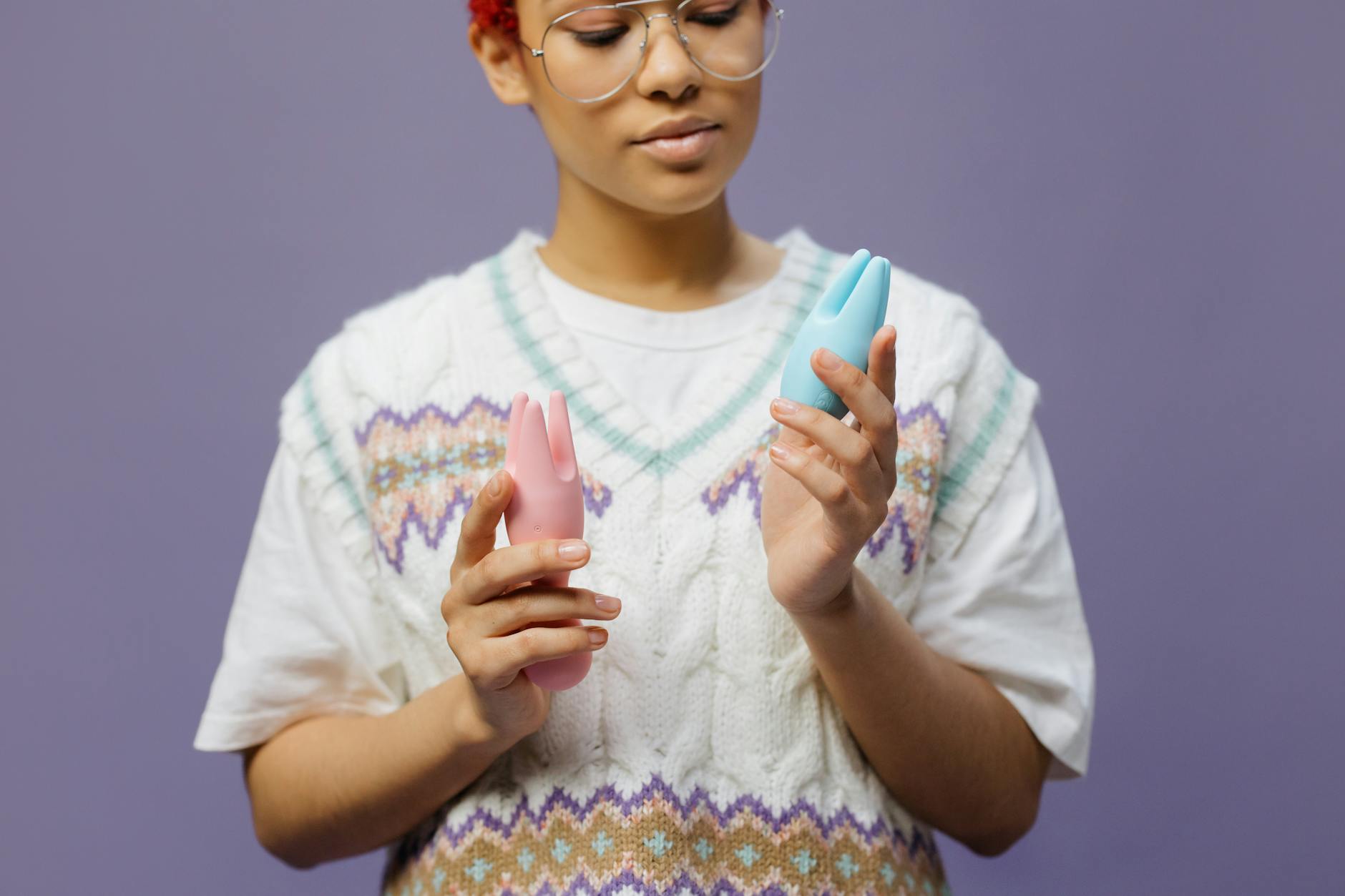
When one partner's excited and the other's not sure
Here's the thing: mismatched comfort around toys isn't a compatibility problem. It's a communication problem. And honestly, it's one of the most fixable ones.
I've worked with hundreds of couples where one person wanted to introduce clitoral vibrators into their sex life and the other felt hesitant, insecure, or outright resistant. The ones who navigate this successfully don't do it through compromise. They do it through understanding what's actually driving the hesitation.
Let's talk about how.
Why your partner might actually be hesitant
Before we get to the how-to, let's be clear about what hesitation usually means. It's rarely "I hate toys" or "You don't satisfy me." It's almost always one of these things:
Fear of inadequacy. If you bring a lemon vibrator into the bedroom, some partners worry they're being replaced. That the toy is better. That you've been secretly unhappy. None of this is rational (the toy does one thing, you do everything else), but it feels very real.
Loss of control or spontaneity. Introducing a toy changes the ritual. It's new. It requires conversation. Some people experience that as a threat to the ease they felt before.
Shame or discomfort with their own sexuality. This is the big one. If your partner grew up with messaging that sex is something that just happens naturally, then needing tools or talking about pleasure can feel like failure.
Concern about pain or injury. Legitimate. Clitoral vibrators are safe, but if your partner doesn't know that, anxiety fills the gap.
Speed and intensity mismatch. Your partner might be worried that a vibrator will change your body's responsiveness, or that you'll prefer it to partnered sex.
Exactly zero of these fears are solved by buying a toy and hoping they disappear.
Start with the conversation, not the toy
I know this feels obvious, but it's where almost everyone stumbles. You either drop a hint ("Maybe we could try something..."), which reads as pressure, or you buy something and surprise them, which feels like a violation of consent (even if that wasn't your intention).
Instead: schedule the conversation. Seriously. Say something like, "Hey, I've been thinking about our sex life, and I'd like to talk about something. Nothing's wrong. I just want to explore together. Can we set aside 30 minutes sometime this week?"
Why schedule it? Because it takes the charge out of the moment. Neither of you is vulnerable. You're not in bed. You're not aroused. It's just two people talking about what they want.
In that conversation, lead with your own curiosity, not your partner's shortcomings. "I've been curious about trying a clitoral vibrator because I want to know what different kinds of stimulation feel like" is radically different from "I want to use a vibrator to actually finish."
Then listen. Actually listen. If your partner says no, that's a full sentence. If they say "I'm nervous," ask what specifically they're nervous about. Don't explain why they shouldn't be nervous. Acknowledge the feeling.
Address the specific fear
Once you know what's actually driving the hesitation, you can address it directly.
If it's about inadequacy: "The toy does suction. Your hands, mouth, and body do everything else. They're completely different sensations. I want both." Then prove it. Don't use the toy as a replacement for partnered stimulation. Use it alongside it. Or use it alone, and then have partnered sex after. Show them they're not being replaced.
If it's about shame: "There's nothing wrong with wanting to explore. My body is mine to discover, and I want you to be part of that." Then move slowly. The first time you use a lemon vibrator with your partner, maybe they just watch. No pressure to participate. Familiarity kills shame.
If it's about control: "This doesn't change what we have. It's just one more option when we want it." Then stick to that. Don't turn toys into the default. Keep plenty of toy-free sex. Let them see it's an addition, not a replacement.
If it's about safety: Show them the evidence. Hello Nancy clitoral vibrators are made from medical-grade silicone, have safety certifications, and are designed for external use. There's no risk of injury if used as intended. Knowledge kills fear.
If it's about intensity: "We can start on the lowest setting and go slow. You can adjust it, or I can. We stop whenever either of us wants." Then follow through. Control matters here.
Build comfort incrementally
Don't jump straight to using a lemon vibrator during sex if your partner's hesitant. Build familiarity first.
Step one: Show them the toy. Let them hold it, look at it, ask questions. No pressure. Just normalize the object.
Step two: Talk about how it works. Let them turn it on, feel the vibration on their finger. Demystify it.
Step three: Use it on yourself while they're present, but not watching expectantly. Maybe you're in bed, and you use it while they're reading or dozing. Make it casual.
Step four: Use it during sex, but not during penetration or the main event. Maybe they're inside you, and you use the vibrator on yourself too. It's an addition, not the main attraction.
Step five: Once they're comfortable, they might want to use it on you. Great. Let that be their choice, not your push.
This progression can take weeks or months. That's not a failure. That's trust being built.
Set actual boundaries
This is crucial for the hesitant partner especially. You need to know you can stop. Your partner needs to know they can stop you.
Before you use a lemon vibrator together, agree on signals. "If either of us says stop or uses a specific word, everything stops." Green light, yellow light, red light can work. Or just plain English: "Tell me if you want to pause."
Then honor it. Every single time. This is how nervous partners learn that bringing a toy into sex doesn't mean losing control.
The partner's job isn't to become comfortable
Here's what I want to say to the hesitant partner directly: You don't have to become magically comfortable. You don't have to like the vibrator. You don't have to love it eventually.
Your job is to communicate what you're feeling and to be willing to try. Your partner's job is to listen and to go slow. If after you've tried it a few times you genuinely hate it, you get to say that, and your partner should hear it. Not with anger or disappointment, but as information.
But also. Be honest about whether you're resisting because it's genuinely not for you, or because you're afraid. Those are different things, and they deserve different responses.
When to involve a professional
If you've had the conversation, done the slow build, honored each other's boundaries, and one of you is still deeply resistant, or if the whole thing becomes a proxy for a bigger relationship problem, a sex therapist or couples counselor is worth the investment. They're trained to help you untangle what the real issue is and move forward from there.
This isn't a failure. It's actually mature as hell. You're saying the relationship matters more than being right about toys.
The payoff
Couples who successfully navigate this usually report one of two outcomes. Either they discover shared pleasure they didn't have access to before, or they discover they have deeper communication than they realized. Sometimes both.
You learn you can talk about hard things. You learn your partner will listen even if they're scared. You learn that mismatched comfort doesn't mean mismatched desire. And sometimes you learn that exploring pleasure together, in whatever form that takes, is one of the most intimate things you can do.
People also ask
How do I bring up wanting to use a lemon vibrator without my partner feeling insulted?
The framing matters completely. Lead with curiosity about your own body, not criticism of theirs. "I've been thinking about what makes me feel good, and I want to explore" is a fact-sharing conversation. "I need something you're not giving me" is an accusation. The first opens dialogue. The second shuts it down.
What if my partner says no and won't budge?
Then you're at a crossroads. Is this a dealbreaker for you? If it's something you genuinely want to explore, say that calmly. "I understand you're hesitant. I'm not asking you to love it. I'm asking if you're willing to let me explore this for myself." You can use a toy alone. You don't need your partner's permission for your own body. But if this is about partnered sex specifically, then you need to decide: is the relationship more important, or is exploring this more important? There's no universal right answer.
How long should it take before my partner feels comfortable?
There's no timeline. For some couples, it's three conversations and one session. For others, it's months of slow building. Trust and comfort move at their own pace. Pushing it doesn't speed it up. If anything, it slows it down.
Can using a lemon vibrator actually change how my body responds to my partner?
No. The vibrator is a different type of stimulation. It doesn't retrain your body or ruin you for other sensation. Your clitoris is not a battery that runs out. It's not an addiction that builds tolerance that way. What might happen is you learn you like variety, which honestly most people do. That's healthy, not broken.
What if I'm the hesitant one? How do I tell my partner without killing the mood?
Tell them outside the bedroom. "I'm feeling hesitant about what you suggested, and I want to talk about it." Explain what's making you nervous. Ask if you can take it slow. A good partner will respect that. If they push, that's a different problem than the toy. That's a boundary problem.
Should we start with a smaller toy if my partner is nervous?
Size isn't usually the issue. A clitoral vibrator like those from Hello Nancy is designed for external stimulation only, so size is minimal. The issue is usually comfort with the idea, not the physical dimensions. But if it helps your partner feel less intimidated, sure. Smaller can feel less intense.
The real shift
Let's be clear about what's actually happening here. You're not just introducing a toy. You're building a system where pleasure is something you talk about, negotiate, and prioritize together. That system is way more valuable than any vibrator.
When couples can say "I want to explore this" and the other person can say "I'm nervous, but I'm willing," and then they figure it out together, they've cracked something most long-term couples never do. They've made sex a conversation, not an assumption.
That's the payoff.