Here's the thing about birth control and pleasure
When you start hormonal birth control, something shifts. Not your desire, necessarily. Your tissue responds differently. The clitoris becomes less engorged during arousal. Lubrication takes longer to build. Sensation feels muted, like you're experiencing sex through a slightly thicker layer of glass. This isn't a side effect you're imagining. It's pharmacology.
The problem? Most people blame themselves instead of the pill. They assume they've lost interest or become numb. In reality, their body's arousal physiology has changed, and their toy hasn't adapted to meet it.
Lemon clitoral vibrators like the Lem work dramatically better with hormonal birth control because they use a completely different stimulation mechanism than traditional vibrators. Instead of relying on direct vibration intensity to trigger sensation, lemon vibrators use gentle air-suction pulses that recruit more nerve endings at once. For tissue that's less engorged and slower to respond, that distributed stimulation pattern works.
How birth control changes tissue sensitivity
Let's start with the actual physiology. Hormonal contraceptives suppress the ovulation cycle, which keeps estrogen and progesterone relatively stable and low. This stability is the point. It's also why the tissue changes.
Estrogen does three things to clitoral tissue. First, it supports blood flow to the clitoris during arousal. When estrogen drops, that engorgement happens slower and doesn't reach the same size. Second, estrogen maintains the moisture barrier of vaginal and vulvar tissue. Less estrogen means the clitoris and surrounding area dry out faster, even during sex. Third, estrogen keeps tissue thickness consistent. Lower estrogen means thinner, more delicate tissue that can't withstand the same mechanical pressure.
Progesterone adds another layer. It dampens the central nervous system's sexual response, which is one reason some people on progestin-heavy birth control report lower libido. It's not laziness. It's chemistry.
The clitoris itself doesn't shrink. But it does become less vasocongested. That means less of the internal erectile tissue fills with blood during arousal. For many people on birth control, the clitoris feels less prominent, less responsive to touch.
Why wand vibrators stop working the same way
Traditional wand vibrators and bullet vibrators rely on direct mechanical vibration. The motor inside oscillates or rumbles at a fixed frequency, usually 50-200 Hz depending on the toy. That vibration travels directly into the tissue where the toy makes contact.
When you have a naturally engorged clitoris with full blood flow, that direct vibration is efficient. The tissue is swollen, nerve-rich, and responsive. The vibration cuts through quickly.
When you're on hormonal birth control, that same wand can feel harsh or even numb. The tissue isn't as engorged, so the vibration disperses less efficiently into the nerves. You might crank up the intensity to compensate, which can lead to numbness from overstimulation rather than pleasure.
It's like trying to hear someone whisper at a loud concert. The information is there, but the signal-to-noise ratio is off.
How lemon vibrators use a different pathway
Air-suction toys like lemon clitoral vibrators work through a fundamentally different mechanism called rhythmic suction stimulation. Instead of buzzing, they use gentle pulses of air to create a vacuum around the clitoris.
Here's why this matters for birth control users: suction stimulates a wider array of nerve receptors at once. Rather than concentrating stimulation into a single point of mechanical pressure, the suction recruits shallow and deep nerve endings across the entire clitoral region. It's like the difference between pressing one finger into your arm versus running your whole hand across it. Same pressure, wildly different sensation.
For tissue that's less engorged and slower to respond, this distributed activation is crucial. You're not asking a small, less-swollen structure to respond to pinpoint vibration. You're asking a wider sensory field to respond to gentle pressure variation.
The other advantage is that air-suction doesn't create friction the way vibration does. For people on hormonal birth control whose tissue is thinner and drier, friction can become uncomfortable surprisingly quickly. Suction is frictionless. You don't need as much lubrication, though using it anyway feels better.
The intensity timing piece
Birth control changes not just how strong sensation feels, but how fast it builds. Arousal takes longer. This is partly the progesterone effect on the central nervous system and partly the reduced blood flow to genital tissue.
Without an engorged clitoris feeding back that rapid engorgement signal to your brain, arousal feels slower. Many people on birth control report needing 15-25 minutes of foreplay or solo warm-up before they're fully ready, compared to 5-10 minutes before.
Traditional vibrators can feel like overkill during this slower ramp-up. You're not ready for full intensity yet, but low-intensity vibration often feels too subtle to register on less-responsive tissue. You get stuck in an uncomfortable middle ground.
Lemon clitoral vibrators solve this with their design. The suction pulse starts gentle and can be ramped slowly. Pattern 1 on a device like the Lem is barely perceptible. By pattern 5, you're in deep, rhythmic stimulation. This matches how your arousal actually builds when you're on hormonal birth control. The toy grows with your response instead of expecting you to catch up to its intensity.
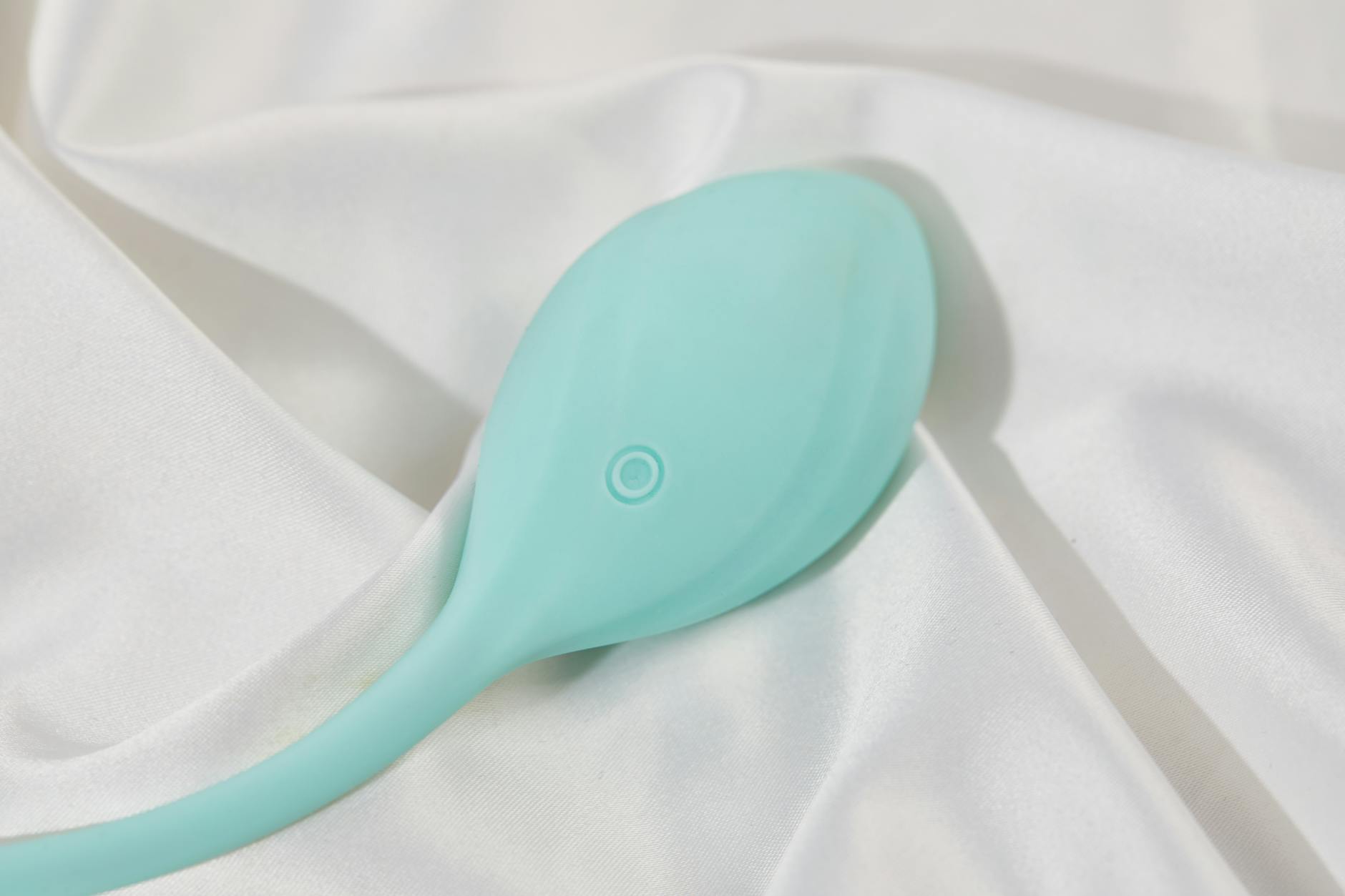
Photo by IFONNX Toys on Pexels
What to do if you're already using a wand vibrator
First, don't panic. You haven't broken your body. Birth control is just mismatched to your current toy.
Try these tweaks before switching entirely. Add more lubricant than feels intuitive. Seriously. Even if you don't feel like you need it, your tissue does. A water-based lube creates a better conductor between vibration and nerve endings. Use the lowest intensity setting for longer. Spend 10-15 minutes ramping up with pattern 1 or 2 instead of jumping to 4 or 5 immediately. Give your arousal time to build before asking for stronger input.
Take breaks. If your current toy requires constant pressure or you're gripping it hard to feel anything, that's a sign the mechanism doesn't match your current sensitivity. Set it down every few minutes and let sensation reset.
If none of those work, that's when a lemon clitoral vibrator or similar air-suction device becomes worth trying. The mechanism is genuinely different, not just a marketing distinction.
The orgasm quality piece people don't talk about
Here's something I notice clinically that doesn't show up in most discussions of birth control and sexuality: orgasm quality often shifts before sensitivity does.
When you're on hormonal birth control, orgasms can feel less intense. They might be faster to achieve once you're warmed up, but shallower. Or they might take longer to build and then plateau at a lower peak. This isn't a reflection of your capacity. It's the reduced tissue engorgement and the progesterone effect on the nervous system.
The weird part is that lemon clitoral vibrators often produce deeper, more full-body orgasms for birth control users than their previous toys did. Why? Partly it's the suction mechanism recruiting more nerve pathways. Partly it's that people on birth control tend to last longer with suction toys because they're not overstimulated by harsh vibration. That extended buildup, paradoxically, leads to stronger release.
You might find that your most intense orgasms come not immediately after starting the toy, but 20-30 minutes in, once your body has fully warmed up and the suction rhythm has brought multiple nerve systems into sync. This is normal and actually a sign the tool is working well.
Switching methods: what to know
If you're considering swapping from a wand to a lemon clitoral vibrator like the Lem, expect a 2-3 week adjustment period. Your nervous system is used to one type of input. A new mechanism feels genuinely different, not better or worse, just different.
Start on the gentlest setting. Let yourself spend time getting familiar with how the suction feels. Many people report that patterns 2-3 on an air-suction toy feel more comfortable and more responsive than patterns 5+ on a wand, even though the wand feels weaker overall. That's because the mechanism is more efficient for your current tissue state.
Use lubricant even though you don't technically need it. Water-based lube makes the experience feel smoother and helps the suction seal better.
Keep your old toy. Variety is actually useful, and you might find that having options means you use each one differently depending on your mood or energy level.
People Also Ask
Does hormonal birth control permanently change clitoral sensitivity?
No. When you stop hormonal birth control, tissue sensitivity returns to baseline within 2-3 months as estrogen and progesterone levels normalize and blood flow to genital tissue rebuilds. Some people report that their pleasure feels even more intense after the adjustment period, partly because the contrast is sharp, partly because heightened sensitivity after a period of lower response can feel remarkable. If you're on birth control long-term, your current sensitivity isn't permanent, even though it feels stable.
Can I use the same lemon vibrator before and after birth control?
Yes. One of the benefits of air-suction toys is that they work well across different tissue states. If you switch birth control methods, change dosages, or eventually stop using hormonal contraception, the same lemon clitoral vibrator will adapt to your changing sensitivity. You won't need to buy a new toy if your physiology shifts. This makes them a genuinely future-proof investment.
Why do some people on birth control have higher libido?
Birth control affects everyone differently. Some formulations are higher in estrogen, which preserves more tissue responsiveness. Some people's baseline testosterone is naturally high enough that the progestin suppression doesn't noticeably lower desire. And some people experience anxiety reduction on birth control (because period-related anxiety disappears), which actually increases their sex drive overall. If you're on birth control and your libido is fine, that's equally normal. The sensitivity changes we're discussing here happen regardless.
Should I switch to a lemon vibrator if I'm thinking about stopping birth control?
Not necessarily. If you love your current toy and you're planning to stop birth control, your tissue sensitivity will change back over a few months. You might find your old toy works even better once you're off hormonal contraception. But if you're on birth control now and your current toy stopped working well, switching to a lemon clitoral vibrator makes sense regardless of your future plans. Air-suction devices are just objectively better matched to hormonally-suppressed tissue.
Does birth control affect pleasure with partners the same way?
Yes. The tissue changes and arousal timing changes apply whether you're having partnered sex or solo pleasure. Some people find that communicating this with partners helps. Instead of "I'm not as into this," it's "My body is responding slower right now, so I need more warm-up time." That's a logistics conversation, not an attraction conversation. It changes everything.
Can lemon clitoral vibrators help with birth control-related numbness?
Often, yes. If you're experiencing complete numbness or very delayed arousal on hormonal birth control, a lemon vibrator is worth trying before assuming you need to switch contraceptive methods. The mechanism is different enough that it might restore sensation when your previous toy couldn't. That said, if numbness is severe, talk to your doctor. Sometimes switching birth control formulations or methods solves the problem more elegantly than switching toys.
The bottom line
Hormonal birth control changes how your body responds to stimulation. That's not weakness, and it's not permanent. It's just biology. Your pleasure hasn't disappeared. It's adapted to a different physiology. The toy you need now might be different from the toy you needed before.
Lemon clitoral vibrators and similar air-suction devices work better with hormonally-suppressed tissue because they use a mechanism that doesn't depend on the kind of deep engorgement that makes traditional vibrators sing. They're gentler, more nuanced, and they adapt to slower arousal patterns. For most people on hormonal birth control, that match is transformative.
If you're frustrated with your current toy, it's not a sign of lost capacity. It's a sign you need a tool built for your current state. That's exactly what a lemon vibrator is designed to be.
Want to talk through whether this might work for you? Get in touch with the Hello Nancy team.