
Let's start with what nobody tells you
Desire doesn't leave your body when a relationship ends or changes. It goes dormant. And there's a massive difference between the two. Dormant means it's still there, waiting for the right signal to wake up. It means you haven't lost capacity for pleasure. You've just temporarily stepped out of the rhythm that used to trigger it.
I've worked with hundreds of people navigating this exact moment. The guilt that follows is almost universal. "I should want this. I used to want this. What's wrong with me?" Nothing's wrong. Your nervous system is protecting you, which is actually smart. But smart doesn't feel good. Smart feels like numbness.
What actually happens to desire after a relationship shift
When a partnership ends or transforms, three things happen simultaneously in your brain and body.
First, the anticipatory circuit shuts down. For years, maybe decades, your brain was wired for someone else's touch. You had a partner to anticipate, to prepare for, to imagine. That neural pathway doesn't just switch off. It atrophies. Your body stops sending the dopamine signals that say "pay attention, pleasure is coming." Without the external cue, the internal machinery gets quiet.
Second, your nervous system goes into a mild protective state. Desire requires vulnerability. It requires you to soften your edges and stay present. After a breakup or a major relationship shift, your nervous system is often too busy managing grief, uncertainty, or even relief to make that softness possible. The system locks down. Not forever. Just until you feel safe enough to open.
Third, there's often a narrative problem. You're telling yourself a story that doesn't match reality. "I'm damaged." "I'll never want sex again." "My body's broken." These stories are loud. They're also almost never true. What's true is usually simpler: "My desire system is recalibrating. I need a different kind of input to restart it."
Lemon clitoral vibrators, specifically air-suction devices like the Lem vibrator, work brilliantly here because they bypass the anticipation circuit entirely. You're not waiting for a partner's touch. You're not managing someone else's pace. You're introducing direct, controllable stimulus that your body recognizes as pleasure without the emotional weight attached.
Why solo touch matters right now
After a relationship ends, solo pleasure is often the fastest route back to your own desire.
Here's why this sounds counterintuitive but works anyway. With a partner, there was negotiation happening. Your pleasure had to fit into their rhythm, their comfort, their timing. That's not bad. It's just a different game. But when you're rebuilding alone, that negotiation is gone. You can spend 45 minutes on one sensation. You can stop and start. You can explore what actually feels good without managing someone else's experience.
This reclamation is not selfish. It's essential. You're teaching your nervous system that pleasure exists independent of partnership. That your desire belongs to you first. Once your body knows that, reconnecting with a partner (if that's what you want) becomes infinitely easier. You're not trying to access someone else's desire for you. You're bringing your own desire to the table.
Lemon clitoral vibrators make this solo work unusually effective because the suction sensation is so distinct from what most people experienced with a partner. A new sensation is a new beginning for your nervous system. It's not trying to replace anything. It's offering something genuinely novel, which means there's no comparison, no ghost of an ex, just present-moment sensation.
The practical rebuild. Week by week.
Week 1-2: Permission only
Start here. Not with the vibrator yet. Just decide that your pleasure matters, full stop. That you're allowed to feel good. That your body deserves attention. This sounds simple. It's usually the hardest part.
Set aside 15 minutes without distraction. Phone in another room. Lights you like. You're not aiming for orgasm. You're aiming for awareness. Where does your body want touch? What temperature feels good? What kind of pressure? This is information gathering. Your nervous system is learning: "Okay, this body gets to have preferences."
Week 3-4: Introduction to sensation
Now introduce the lemon clitoral vibrator, but don't turn it on yet. Let yourself get curious. How does it feel in your hand? What does the texture remind you of? Run it over your arm. Your neck. Let your body get familiar with it as an object before it becomes a tool.
When you're ready, turn it to the lowest setting. The lightest patterns. This is not about reaching orgasm. This is about your nervous system learning to trust that this sensation is safe, that it feels good, that your body can respond. Many people find that three to five minutes of the lowest setting is enough for week three. That's success.
Week 5-6: Actual pleasure building
By now, your body usually recognizes the device and the sensation feels less shocking. You can increase intensity gradually. Spend more time. Notice what patterns your body gravitates toward. Some people find that the consistent pulse of a lemon sucker device is exactly what rekindled their arousal. Others need to experiment with timing, or pattern, or position.
If you find yourself feeling numb or distant, that's not failure. That's your system saying "I need more time." Go back to week one. There's no timeline here.
Week 7 onward: Integration
You're likely noticing shifts by now. Maybe you're thinking about touch more often. Maybe you're feeling more present in your body. Maybe you're actually experiencing anticipation. The rebuilding is working.
This is when many people get impatient and try to "get back to normal." Don't. You've just built something new. Your desire has rewired itself on your own terms, independent of a partner. That's precious. Protect that before you fold someone else's rhythm back in.
Why lemon vibrators specifically help this process
Lemon sexual toys, particularly air-suction clitoral vibrators, have design features that make them unusually helpful for desire rebuilding.
The suction sensation is non-traditional. Most people haven't experienced it before, or it's been years since they have. That newness matters. Your brain isn't comparing it to an ex's touch or judging it against a previous partner. It's just experiencing sensation without context. That's clean. That's free.
The control is total. You hold the device. You set the pattern. You choose when to increase intensity or dial back. That autonomy is healing after a relationship where your pleasure might have been reactive instead of active. Lemon clitoral vibrators put the agency back in your hands. Literally.
The sensation is intense enough to interrupt rumination. If your nervous system is spinning on grief or anxiety, a focused physical sensation that demands your attention is actually grounding. It brings you back to your body, back to the present, back to the fact that you're alive and capable of feeling good. That matters more than you think.
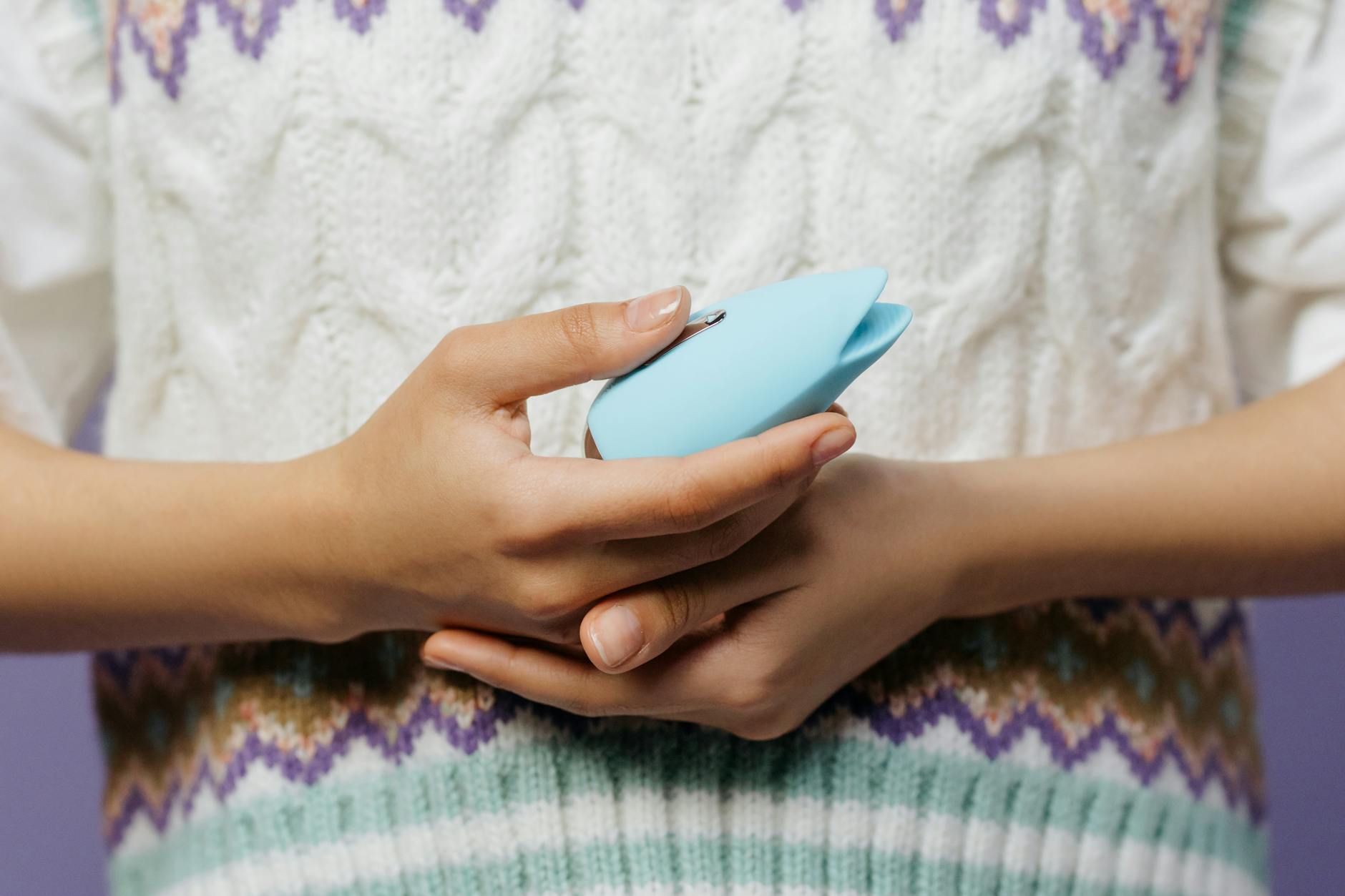
Photo by cottonbro studio on Pexels
What happens when you start wanting pleasure again
Desire rebuilding has milestones that are quieter than orgasm, but they matter more.
You notice you're thinking about touch more casually. Not in a goal-oriented way. Just throughout your day, small moments of "oh, that would feel good." That's your anticipatory circuit waking up. That's huge.
You find yourself reaching for the lemon vibrator because you want to, not because you think you should. That shift from obligation to desire is when you know your nervous system is genuinely healing. You're not trying to fix yourself. You're just experiencing something that feels good.
You might notice that your sense of your own body has changed. That you're more present in your skin. That you're less separate from your desire. After a relationship ends, many people disassociate from their bodies slightly. It's a protective move. Coming back to inhabit your own body fully is part of the healing, and pleasure is one of the fastest routes home.
Some people also notice that how you use lemon vibrators when you're just starting out with toys comes with less performance pressure overall, which matters if you're rebuilding confidence. You're not trying to prove anything to anyone.
The relationship question. Eventually.
At some point, you might want to share this with a partner again, or meet someone new, and the question arises: "Do I still want that? Does my body still want partnership?"
Honestly, you won't know until you do the solo work first. And the solo work is not preparation for partnership. The solo work is the main event. Partnership is something you add later, from a place of wholeness instead of need.
If you do want to use lemon vibrators with a partner, the fact that you've already rebuilt your own desire circuit makes that so much easier. You come to that conversation knowing what you want, what your body responds to, where you need support. That's not something you can learn with someone else. You have to know it alone first.
When to push, when to wait
There's a difference between healing at your own pace and using numbness as an excuse to avoid feeling altogether.
If you've been in this rebuild for two months and you feel nothing at all, not even curiosity, then something else might be happening. Sometimes desire loss is connected to depression, trauma, medication, or exhaustion. Sometimes it's grief that needs space before pleasure can return. There's no shame in that. A therapist or a doctor can help sort what's underneath the numbness.
But if you're feeling restless, curious, even a little bit pulled toward your own pleasure, then the work is working. You're rebuilding. Not back to what was. Forward to what's next.
FAQ
How long does it actually take to rebuild desire after a relationship ends?
There's no fixed timeline. Some people reconnect with their own pleasure in four to six weeks. Others need months. It depends on how long the relationship lasted, how it ended, what your nervous system is managing, and how much solo pleasure work you're doing. The timeline matters less than the consistency. Regular, gentle engagement with your own body works better than sporadic intense effort.
Is it normal to feel guilty about using a vibrator after a breakup?
Completely normal and also something to notice. Guilt often signals that some part of you still feels like your pleasure belongs to someone else, or that you should feel broken right now. You're allowed to feel good. Your body deserves pleasure independent of relationship status. If the guilt is strong, that might be worth exploring with a therapist, but the guilt itself is not a sign you're doing something wrong.
Can lemon vibrators actually help with desire that's gone dormant?
Yes, because they work neurologically. They introduce a sensation that your nervous system recognizes as safe and pleasurable without the emotional weight of a partner or a shared history. The novelty of the suction sensation specifically helps reset your anticipatory circuit. But the vibrator is a tool. The real work is your permission to feel good again.
What if I'm using a lemon clitoral vibrator and it still doesn't feel good?
That's information, not failure. It might mean you need more time in the earlier weeks. It might mean you need a different kind of stimulation altogether. It might mean that your nervous system is protecting you for a reason. Try slowing down. Try longer warm-up time. Try using it without the goal of pleasure, just for sensation. And if weeks of gentle work still result in numbness, talk to someone. Sometimes desire loss points to something deeper that needs attention.
Should I tell a new partner that I'm rebuilding desire after a relationship ended?
That depends on how long you've been dating and what feels safe. But here's the thing. If you do the solo work first, you'll arrive in any new partnership from a place of knowing yourself, which changes everything. You don't have to have it all figured out. You just have to know that your pleasure matters and that you're capable of feeling good. A partner worth keeping will appreciate that clarity.
Can using lemon vibrators help me reconnect with my body in other ways too?
Absolutely. Solo pleasure work isn't just about orgasm. It's about inhabiting your body, noticing what feels good, practicing presence, and reminding yourself that you deserve care. All of that ripples outward into other areas of your life. When you rebuild your relationship with your own body, you rebuild your relationship with yourself. Everything else follows from that.
Desire doesn't disappear when a relationship ends. It reroutes. Your job isn't to force it back into the old pathway. Your job is to build a new one that belongs entirely to you. That's not settling. That's reclaiming.